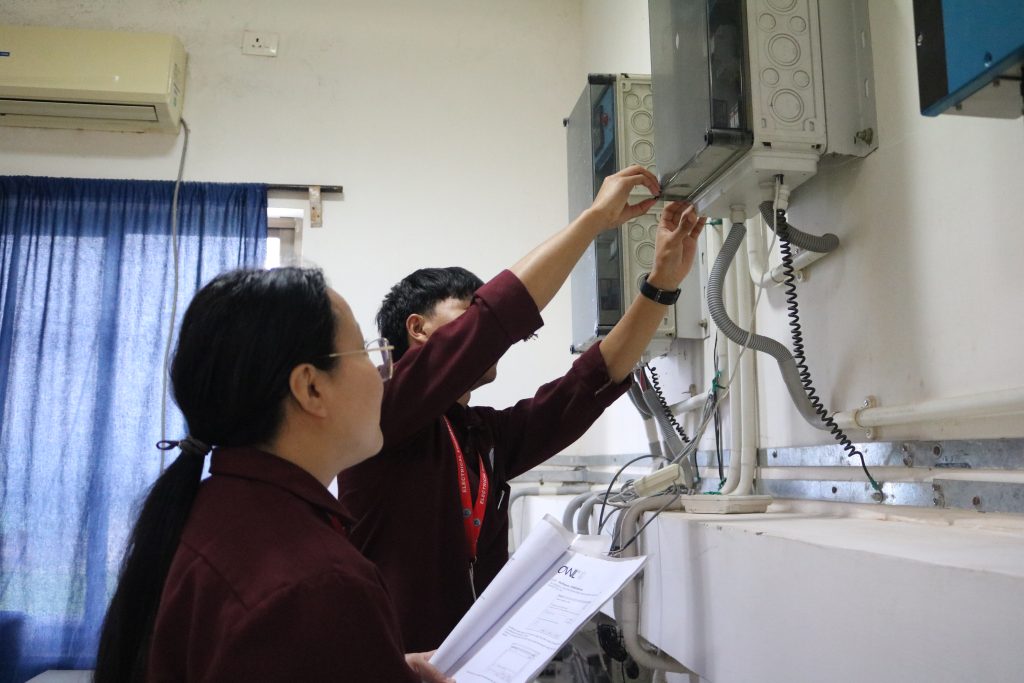
Bachelor of Engineering in Electrical Engineering
The aim of the programme is to equip graduates with the basic knowledge needed for successful careers in electrical engineering, including electrical machines, power generation, power transmission and distribution, power system protection, power control drives, renewable energy generation and integration, electrical network management and design, as well as fostering professional ethics and leadership qualities.
Learning Outcomes of the Programme
Upon successful completion of the Bachelor of Engineering in Electrical Engineering, the graduates are expected to have the ability to:
1. Apply scientific, mathematical and lectrical engineering principles to solve problems in the field of electrical engineering
2. Design electrical networks for power systems and industrial applications that meet technical, safety, environment and economic requirements
3. Mitigate electrical engineering problems using simulation, experiments and field data
4. Design and manage transmission and distribution networks, operate power generating station including conventional and non-conventional sources
5. Appraise innovative solutions to address real-life problems in power sectors
6. Evaluate the professional, ethical and social issues related to electricity
7. Demonstrate interpersonal skills such as cooperation, negotiation, teamwork and leadership
8. Build an educational foundation to pursue career / higher studies in engineering, emerging technologies and entrepreneurship.
Programme Structure
Year 1
Semester I
MAT101 – Calculus and Infinite Series
PHY101 – Engineering Physics – I
EWP101 – Electrical Workshop Practice
CPL101 – Introduction to Programming
ACS101 – Academic Skills
EGP101 – Engineering Graphics
Semester II
MAT102 – Multivariate Calculus, Differential Equations and Matrices
EEM101 – Electrical and Electronics Engineering Material
TSM101 – Engineering Mechanics
DZG101 – རྫོང་ཁ་བརྡ་དོན་སྤྲོད་ལེན།
MGT401 – Project Management
CHE101 – Engineering Chemistry
Year 2
Semester I
MAT204 – Complex Analysis, Fourier Series and PDE
ISM201 – Instrumentation Systems
CKT201 – Circuit Theory-I
ECD201 – Electronic Circuits and Devices-I
ECD202 – Digital Electronics and Logic Design
Semester II
MAT209 – Transforms and Testing of Hypothesis
EFT201 – Electromagnetic Field Theory
CKT202 – Circuit Theory-II
ECD203 –Electronic Circuits and Devices-II
SNP201 – Signals and Systems
Year 3
Semester I
PSS301 – Power Generation
FMH302 – Hydraulics and Hydraulic Machines
EMC301 – Electrical Machine-I
ELE303 – Power Electronics
MAT311 – Numerical Methods with Programming
Semester II
ECD304 – Microprocessor and Microcontroller
EMC302 – Electrical Machine-II
CTS401 – Control Systems
RET403 – Energy Economics Policy and Management
PSS302 – Power Transmisson and Distribution
Year 4
Semester I
PSS404 – Power System Analysis
PSS403 – Switchgear and Protection
PRW403 – Research Project
Major
Minor
Semester II
PSS405 – High Voltage Engineering
PRW402 – On the Job Training
PRW403 – Research Project
Major
Minor
List of Major I Modules
MAJOR I: Power System Engineering
1. PSS406 Smart Grid Technologies
2. EMC403 Electrical Machine Design
3. PSS407 Advanced Power System Protection
4. PSS408 Power Quality and Reliability Analysis
5. PSS409 AI Application in Power Systems
6. PSS410 Power System Operation and Control
List of Major II Modules
MAJOR II: Renewable Energy
1. RET401 Solar Energy Fundamentals and Application
2. RET402 Alternate Energy Technologies and Energy Storage
3. RET404 Integration of Renewable Energy into Grid
4. RET405 Hydropower Resource Assessment and Design
5. ECE402 Energy Auditing and Efficiency
6. ELE404 Industrial Drive and Electric Vehicle Drives
List of Minor Modules
1. EDP101 Entrepreneurship
2. MIM301 Industrial Engineering & Production Management
3. MIM402 Total Quality Management
4. EWP402 Electrical Installation and Design for Buildings
5. CTE207 Artificial Intelligence
Carrer Related Oppertunities
Career-Related Opportunities for Bachelor of Engineering in Electrical Engineering
The Bachelor of Engineering in Electrical Engineering at the College of Science and Technology (CST) is a comprehensive programme focused on Power System Engineering and Renewable Energy Engineering. Established in 2001, the programme has produced over 680 graduates who are contributing to civil service, power generation, transmission and distribution utilities, corporations, private organizations, academia, and other sectors.
The programme provides students with a strong foundation in circuit analysis, electrical machines, power systems, instrumentation and control, and emerging energy technologies. Through laboratory practices, design projects, case studies, study tours, and field exposure, students develop practical competencies required for professional engineering practice.
Aligned with Bhutan’s sustainable development goals, energy transition initiatives, and emerging opportunities from the Gelephu Mindfulness City and the 10X economy vision, the programme prepares graduates to support smart infrastructure, renewable energy integration, smart grids, automation, and advanced power system applications. Graduates are equipped with skills in system design, energy management, innovation, research, and entrepreneurship, enabling them to contribute effectively to Bhutan’s evolving energy sector and economic transformation. The programme continues to nurture competent, adaptable, and responsible electrical engineers ready to address future technological challenges.
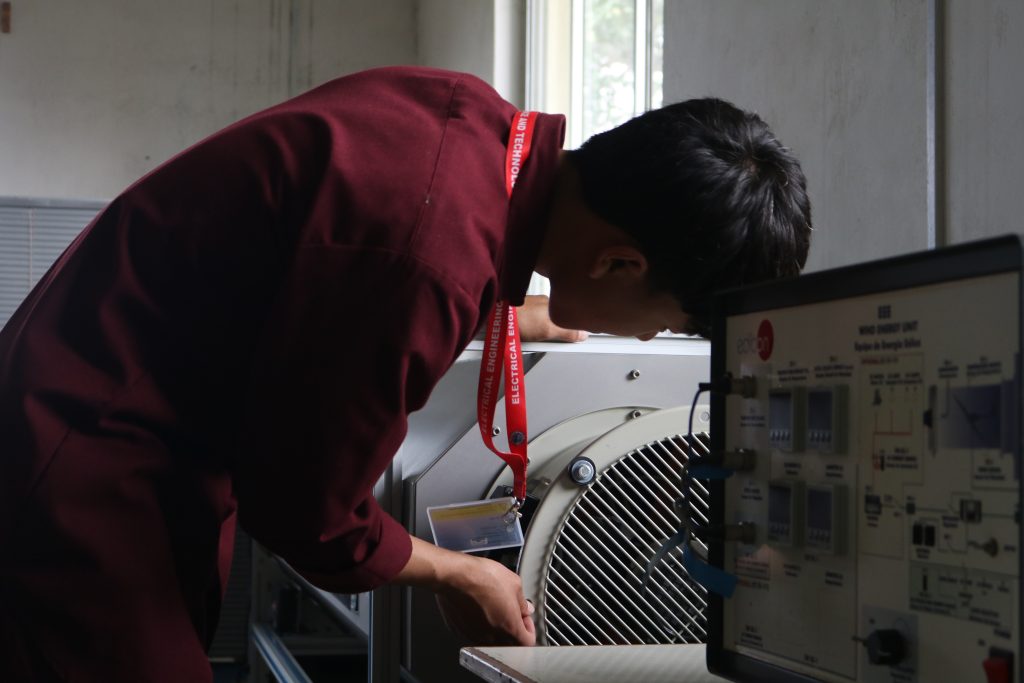
Electrical Machines Laboratory:
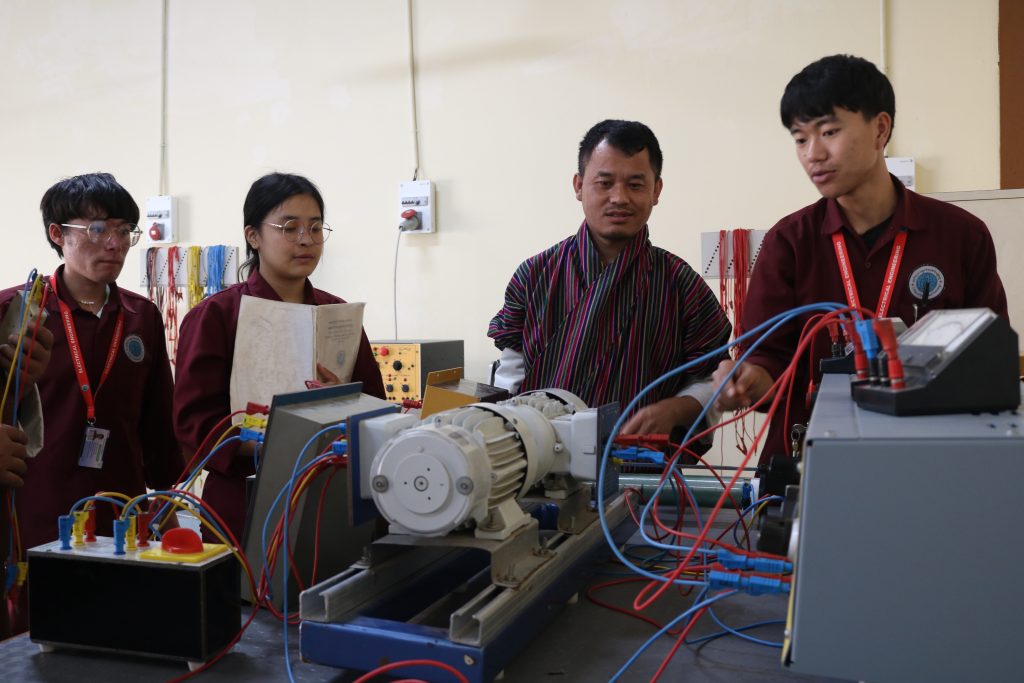
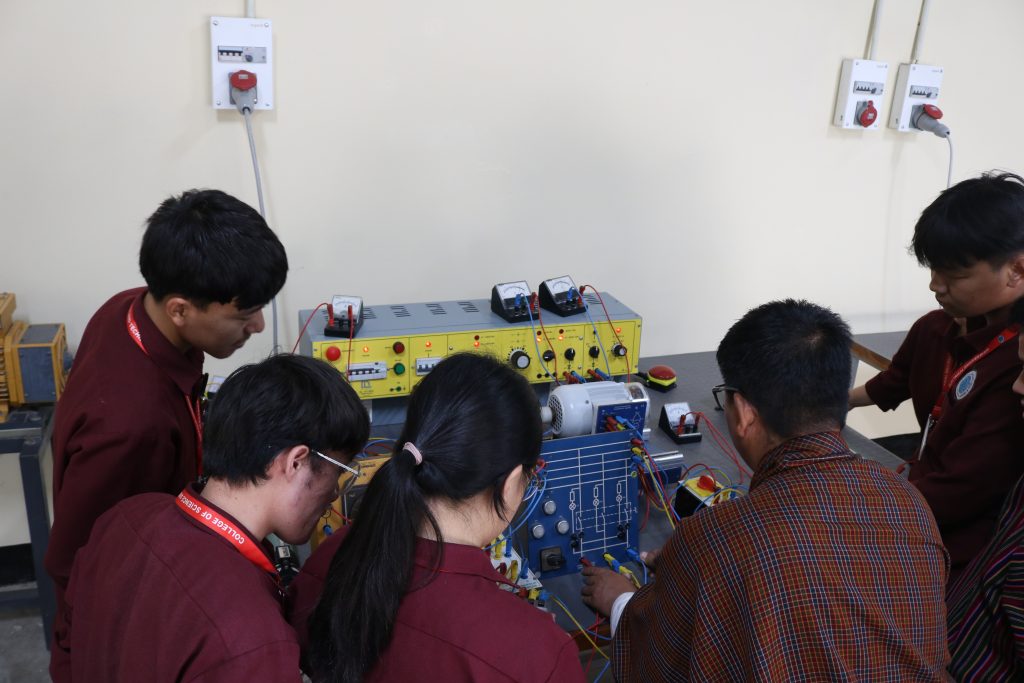
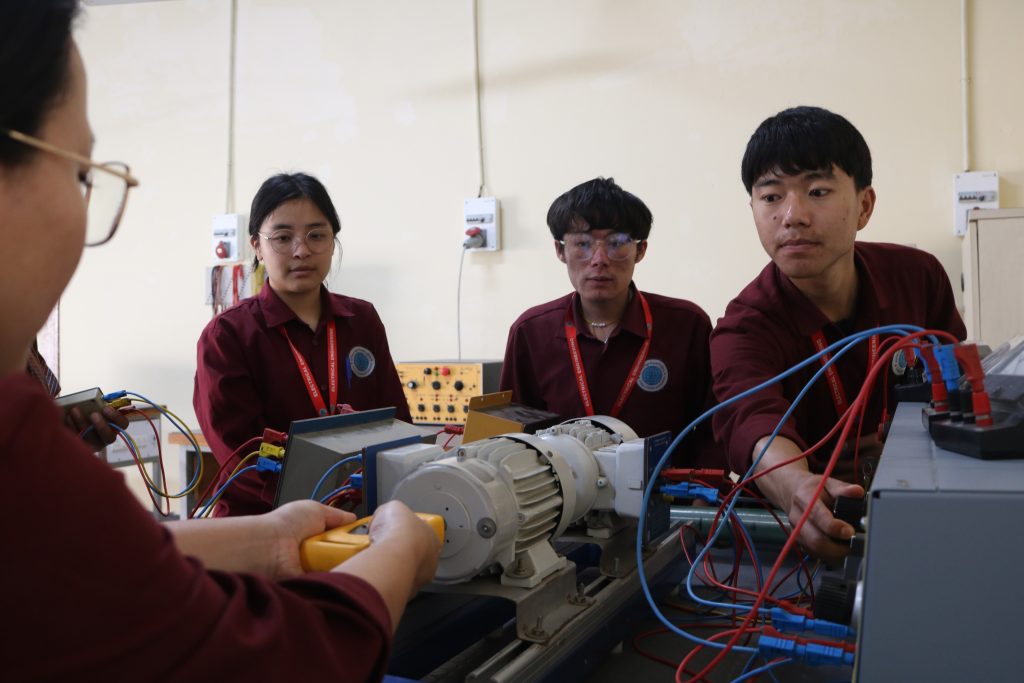
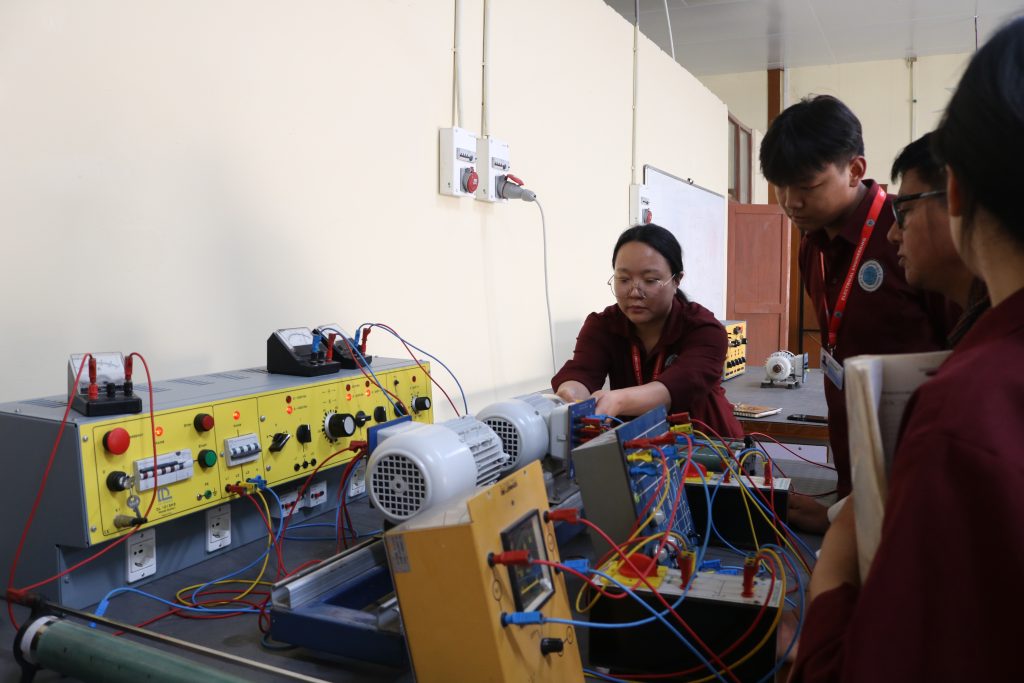
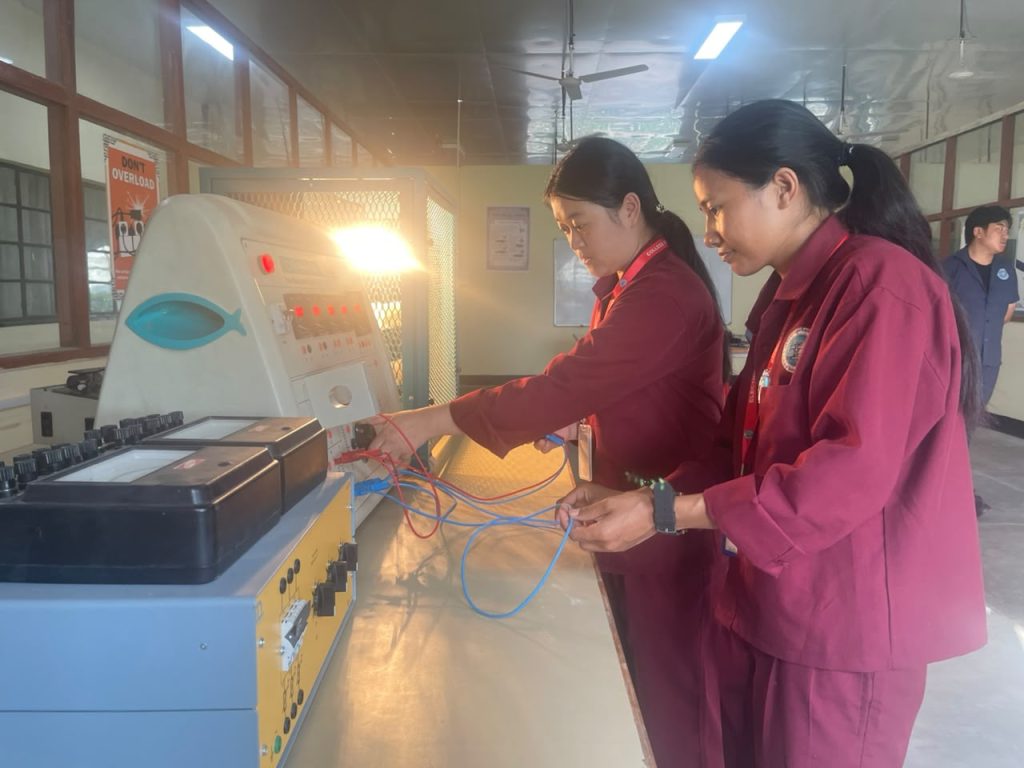
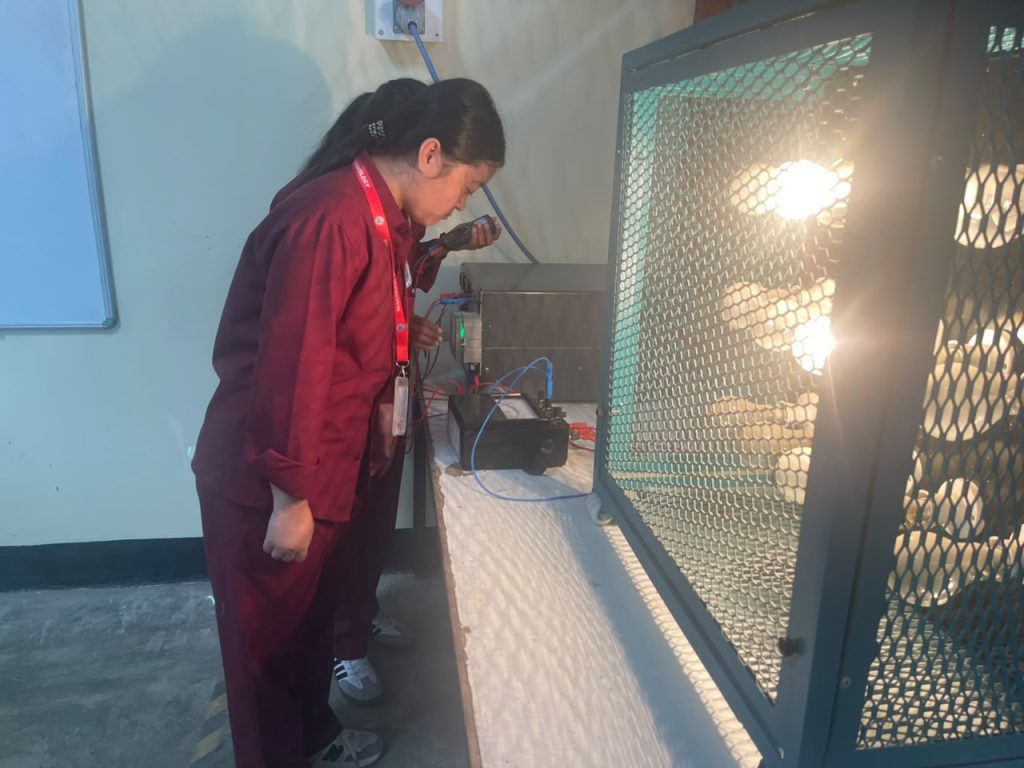
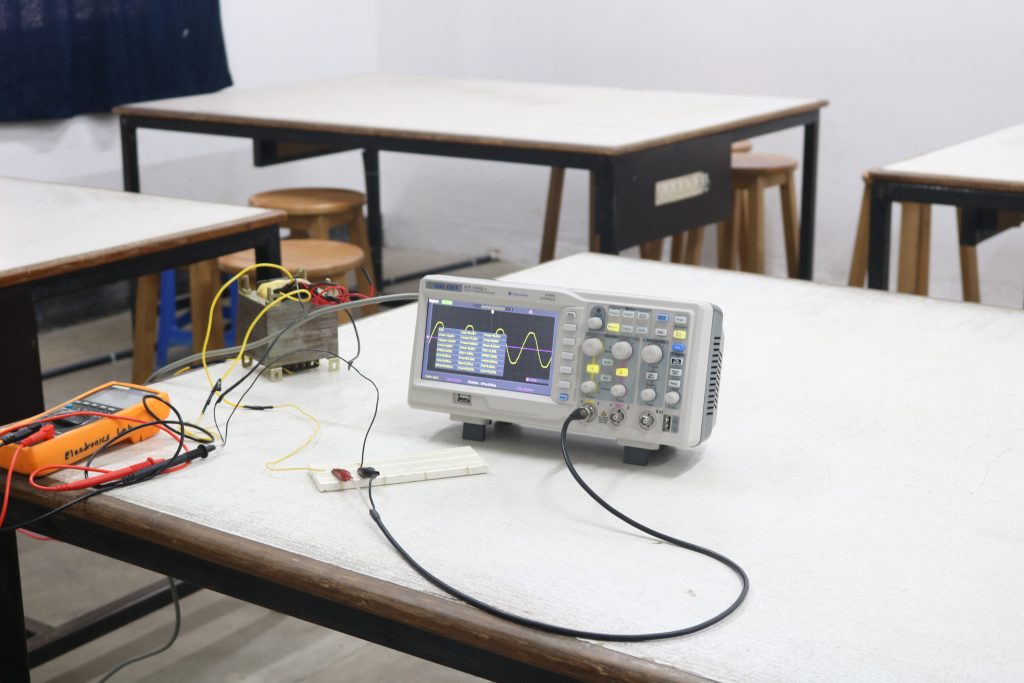
The Electrical Machines I & II laboratories offer hands-on experience with DC generators, motors, transformers, induction motors, and synchronous machines. Students perform tests on open/short circuits, load characteristics, speed control, parallel operation, and efficiency calculations. These practicals strengthen theoretical understanding and develop industry-relevant technical skills.
Electrical Measurements and Instrumentation Laboratory
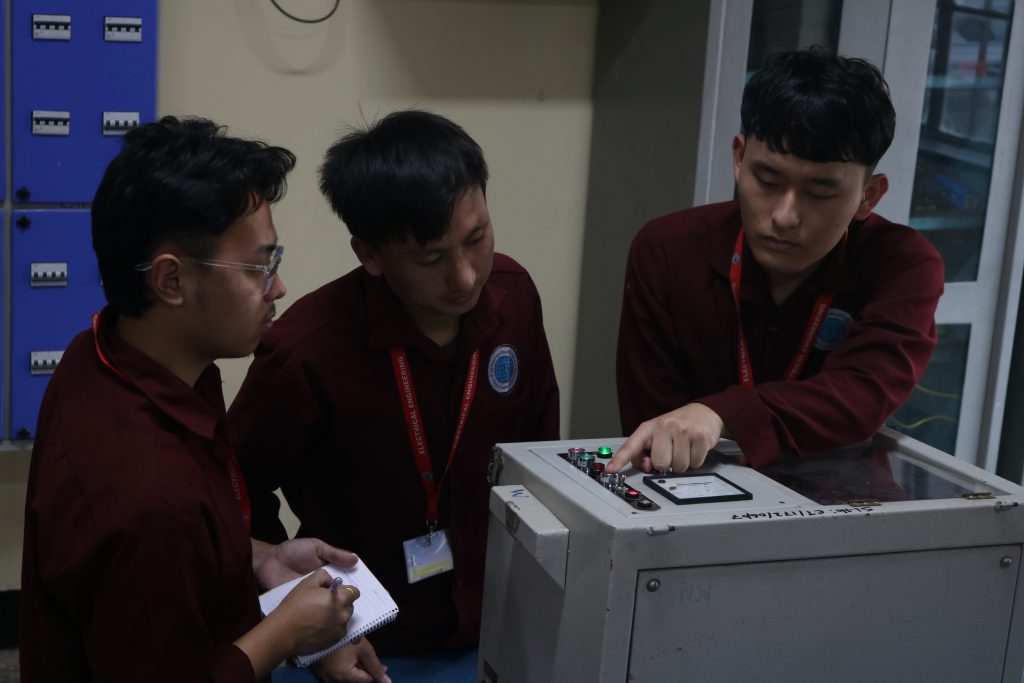
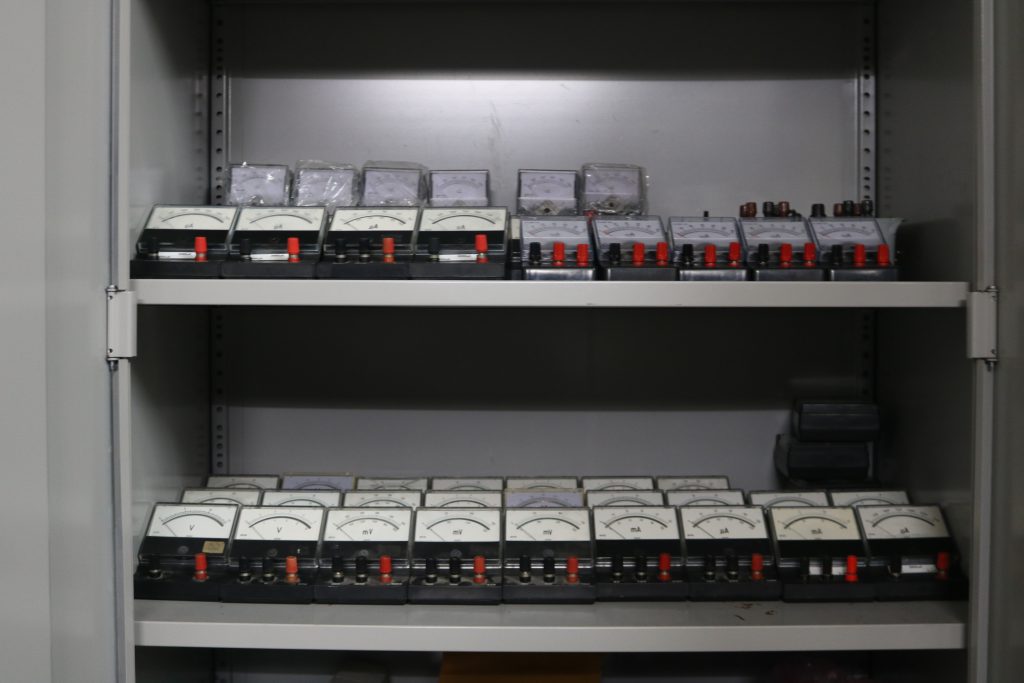
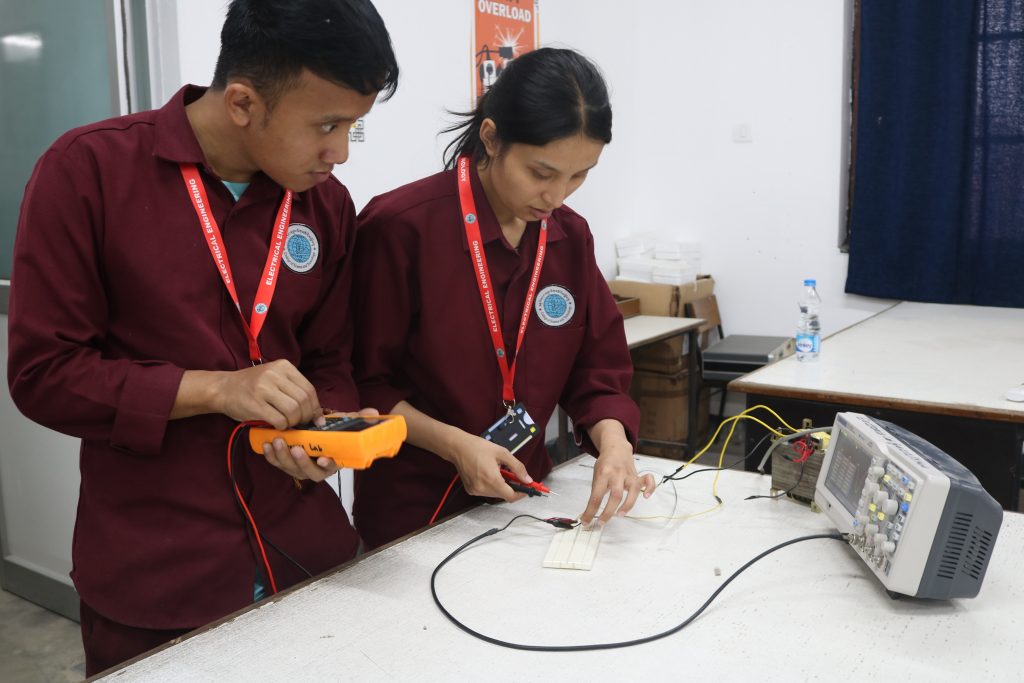
The Electrical Measurements and Instrumentation Laboratory provides hands-on training in electrical measurement, instrument calibration, and sensor characterization. Students perform experiments on power measurement, instrument transformers, earthing resistance, inductance, capacitance, and transducers such as thermocouples, LVDTs, strain gauges, and photo sensors, developing practical skills in electrical testing and instrumentation.
High Voltage Laboratory
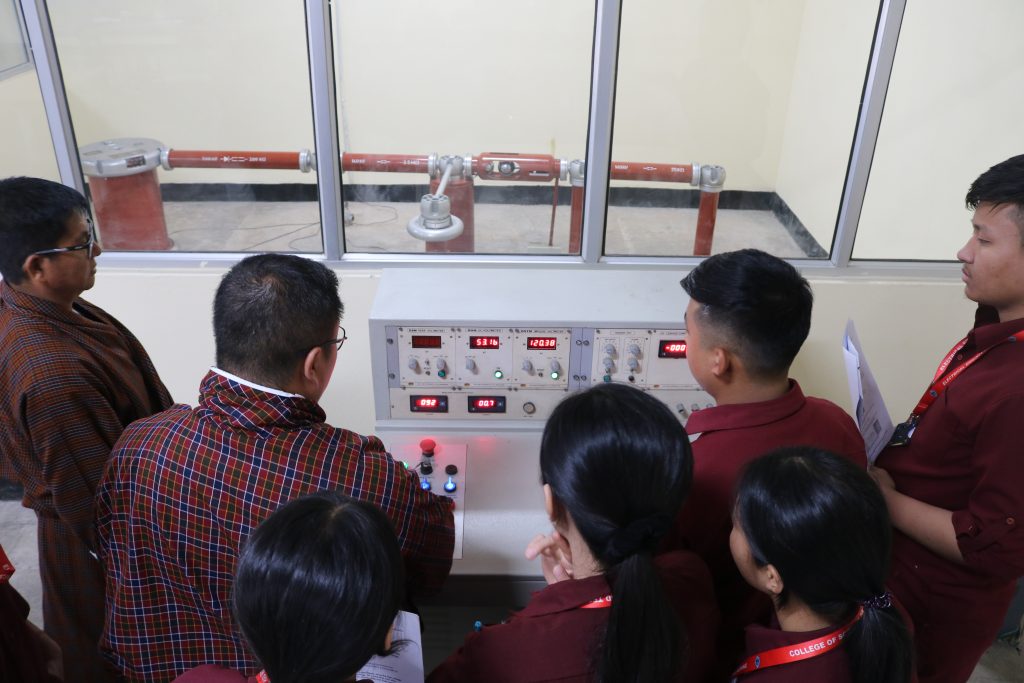
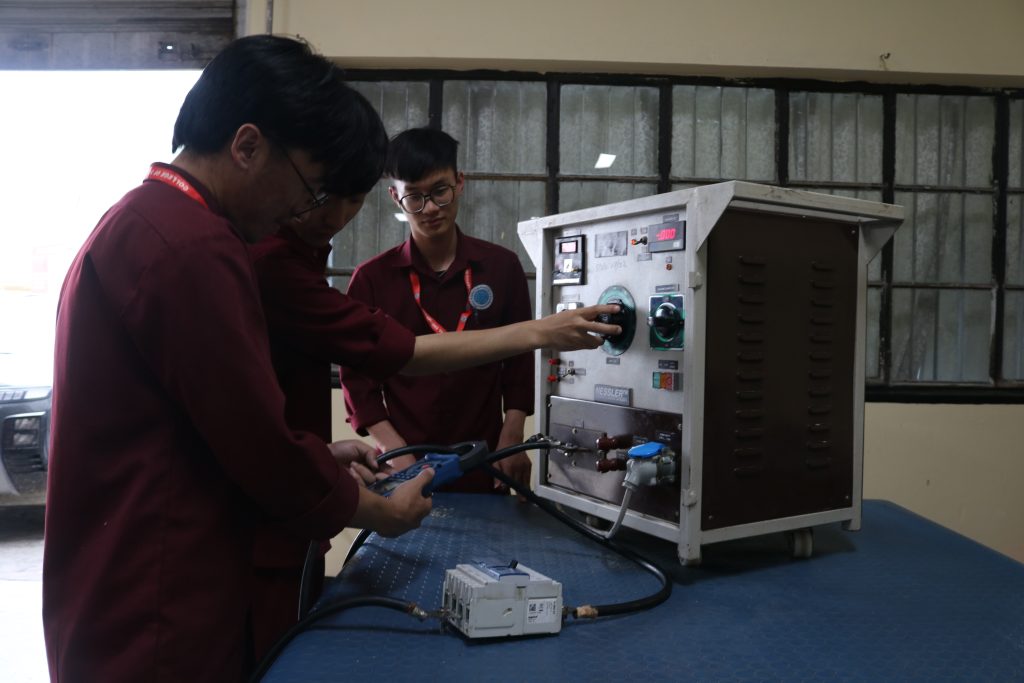
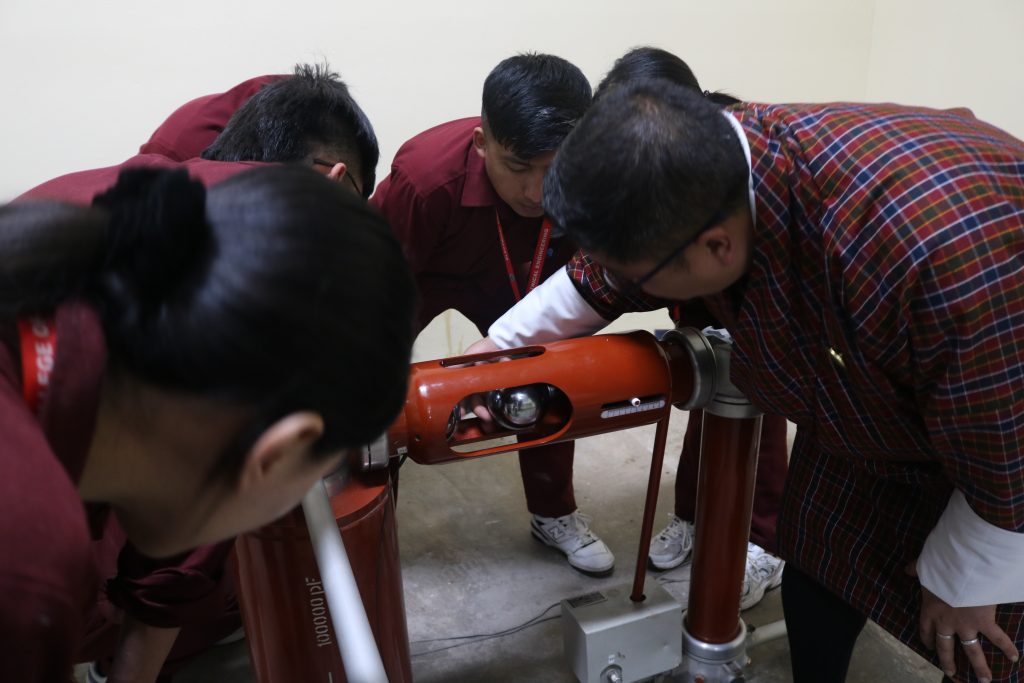
The High Voltage Engineering Laboratory provides students with practical experience in high-voltage testing techniques, insulation diagnostics, and electrical equipment evaluation. The laboratory enables students to investigate the dielectric properties and breakdown characteristics of insulating materials, transformer oil, and power cables, as well as perform testing on circuit breakers, MCCBs, and RCCBs. Students also gain hands-on experience in high-voltage generation, lightning impulse testing, and insulation breakdown analysis.
Power Electronic Laboratory
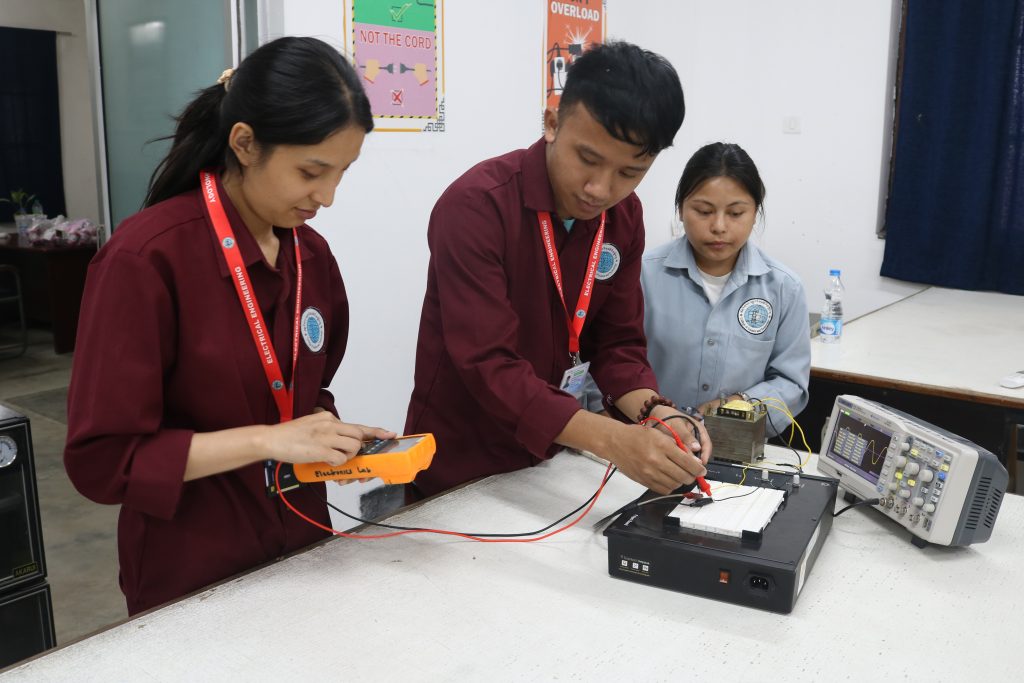
The Power Electronics Laboratory provides students with practical exposure to the design, analysis, and operation of modern power electronic converters and control circuits. The laboratory covers SCR, TRIAC, DIAC, and IGBT-based applications, including phase-controlled rectifiers, AC voltage controllers, PWM inverters, PWM converters, DC–DC converters, and sequence controllers. Students investigate the performance of these circuits with different load conditions (R, RL, RLC, and RLE) through both hardware implementation and computer simulation using industry-relevant software.
Circuity Theory Laboratory
The Basic Electrical Circuits Laboratory provides students with a strong foundation in electrical circuit analysis through hands-on experiments that reinforce theoretical concepts. The laboratory enables students to verify fundamental circuit laws and network theorems, including Kirchhoff’s Current and Voltage Laws (KCL and KVL), Superposition, Thevenin’s, Norton’s, and Maximum Power Transfer Theorems. Students also gain practical experience in measuring AC waveforms, analyzing RL and RC circuits using phasor diagrams, and investigating the resonance characteristics of series and parallel RLC circuits.
Switchgear and Protection Laboratory.
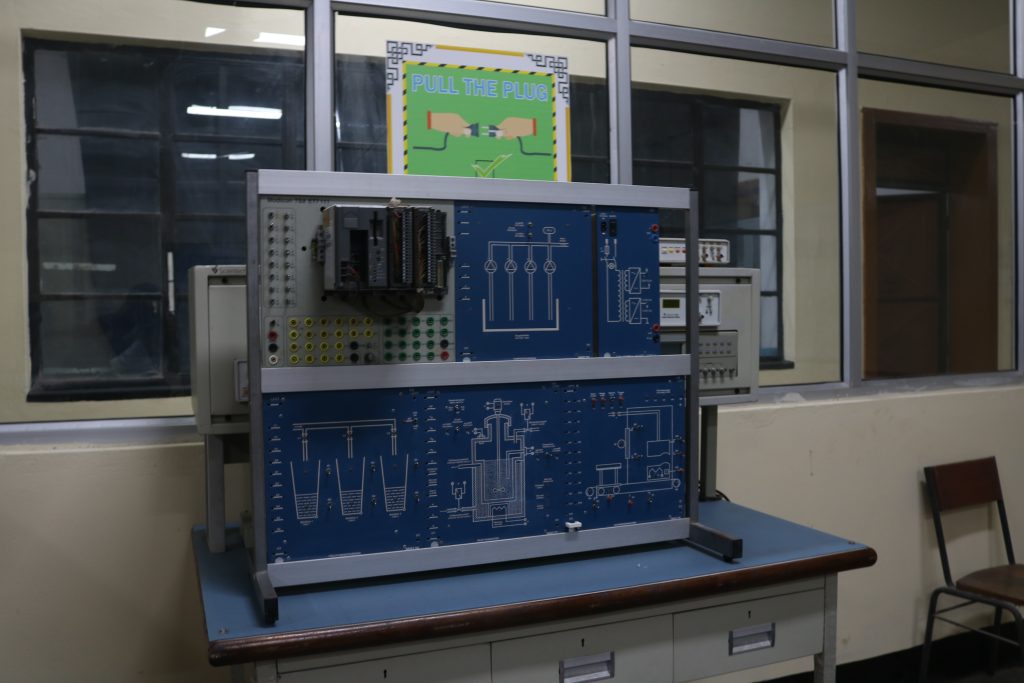
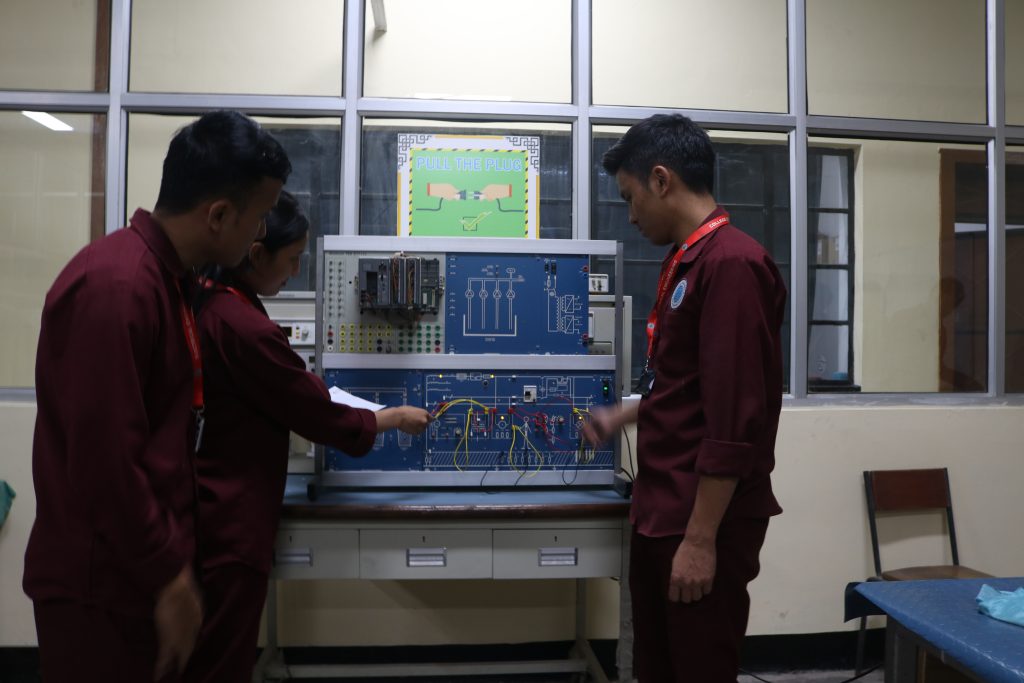
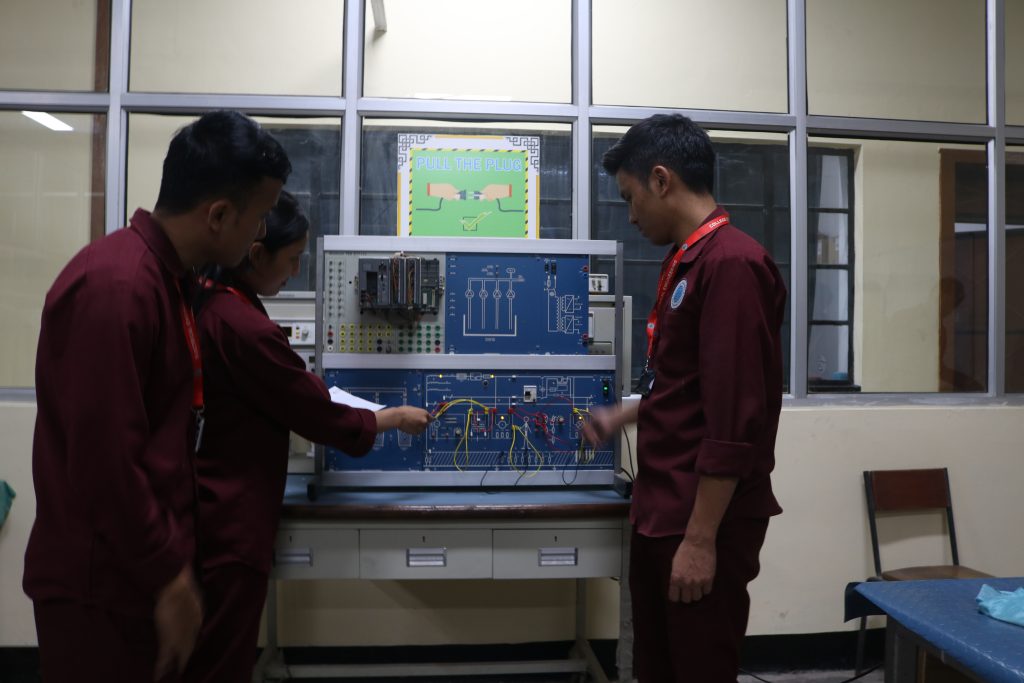
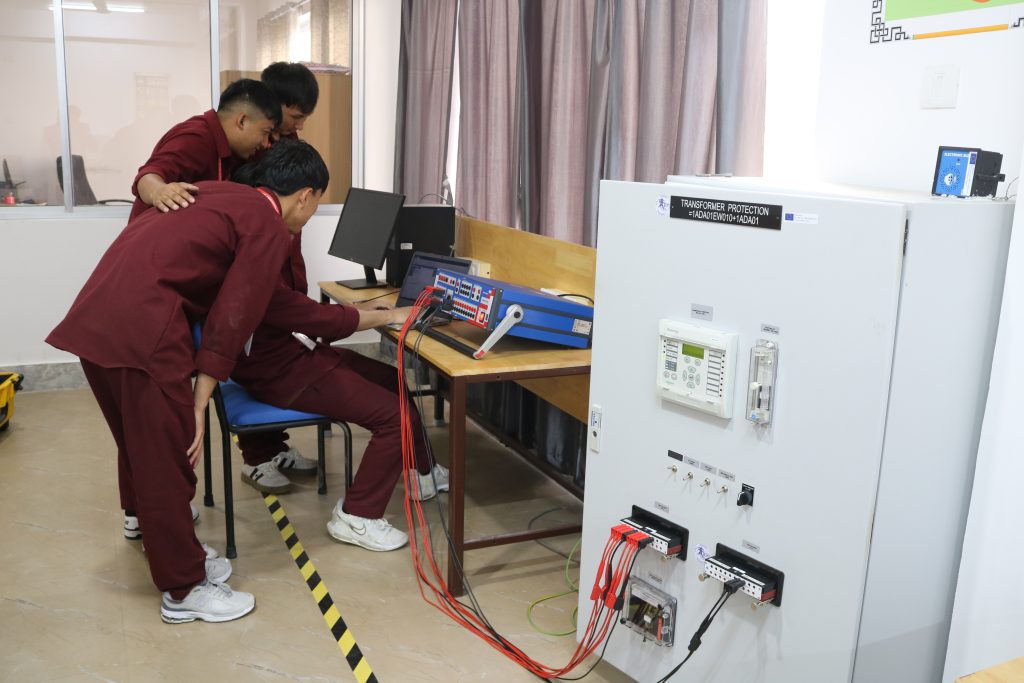
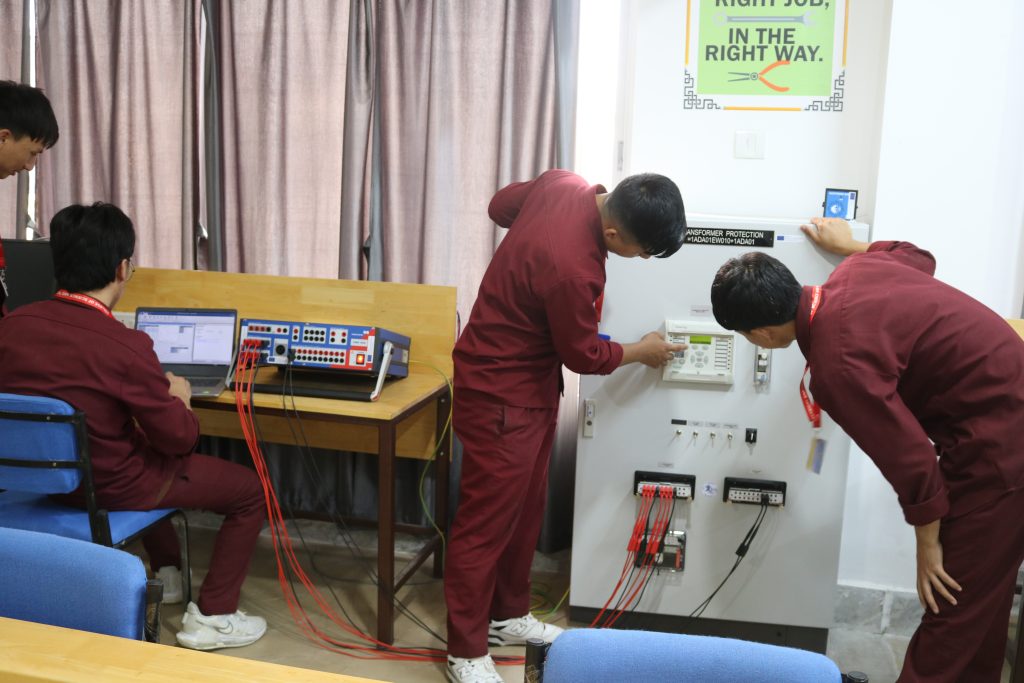
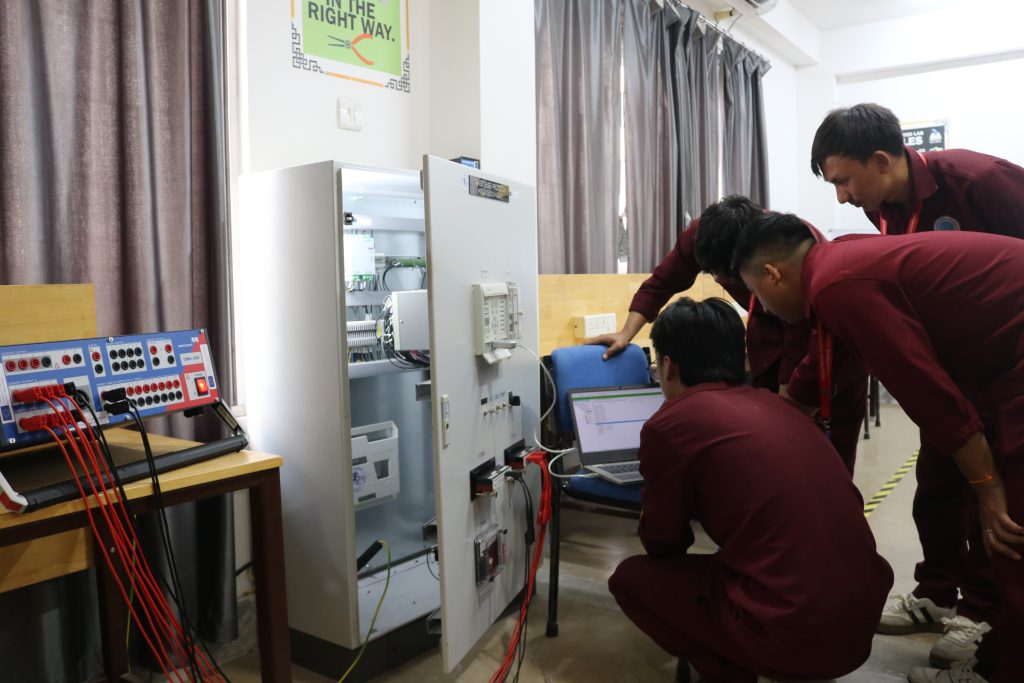
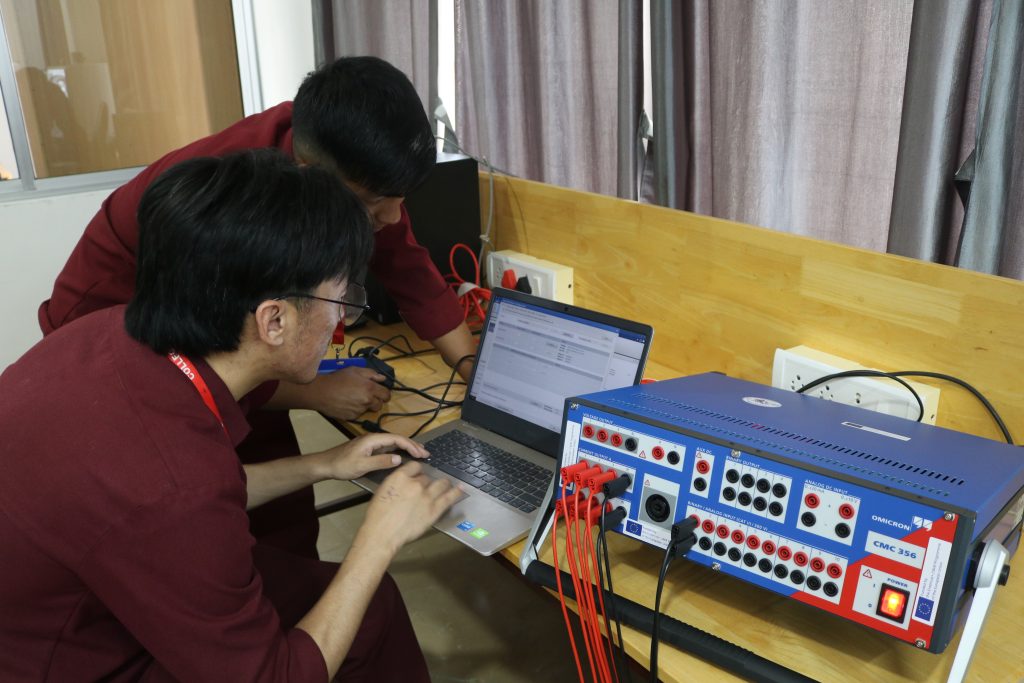
The Power System Protection Laboratory provides students with practical training in the operation, testing, and analysis of protective relays and protection schemes used in modern power systems. The laboratory covers the characteristics and performance of overcurrent, differential, overvoltage, undervoltage, directional, reverse power, transformer, generator, and busbar protection systems. Students conduct relay pickup, stability, and coordination tests using dedicated transformer, generator, line, and busbar protection panels.
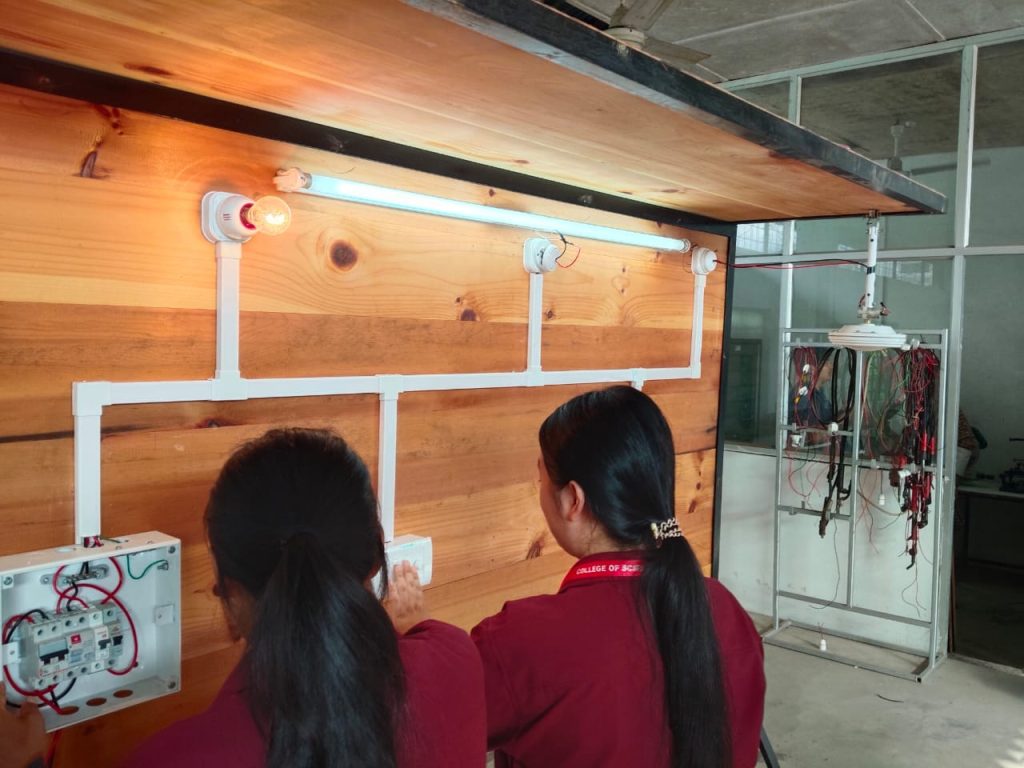
Electrical Workshop Practice
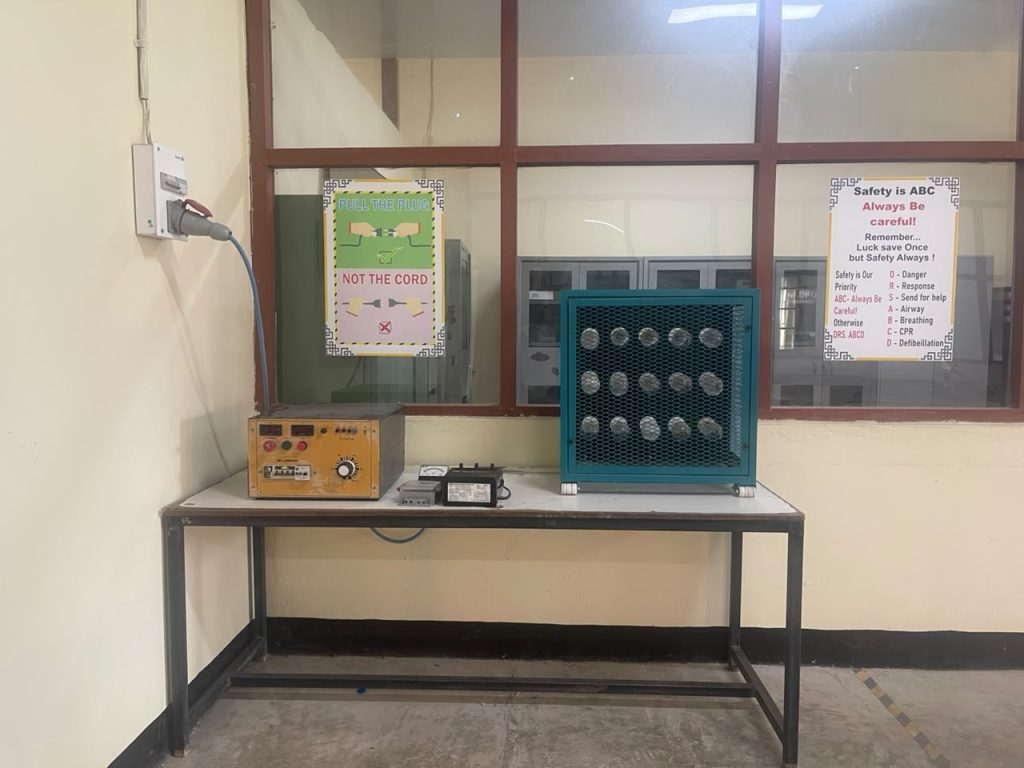
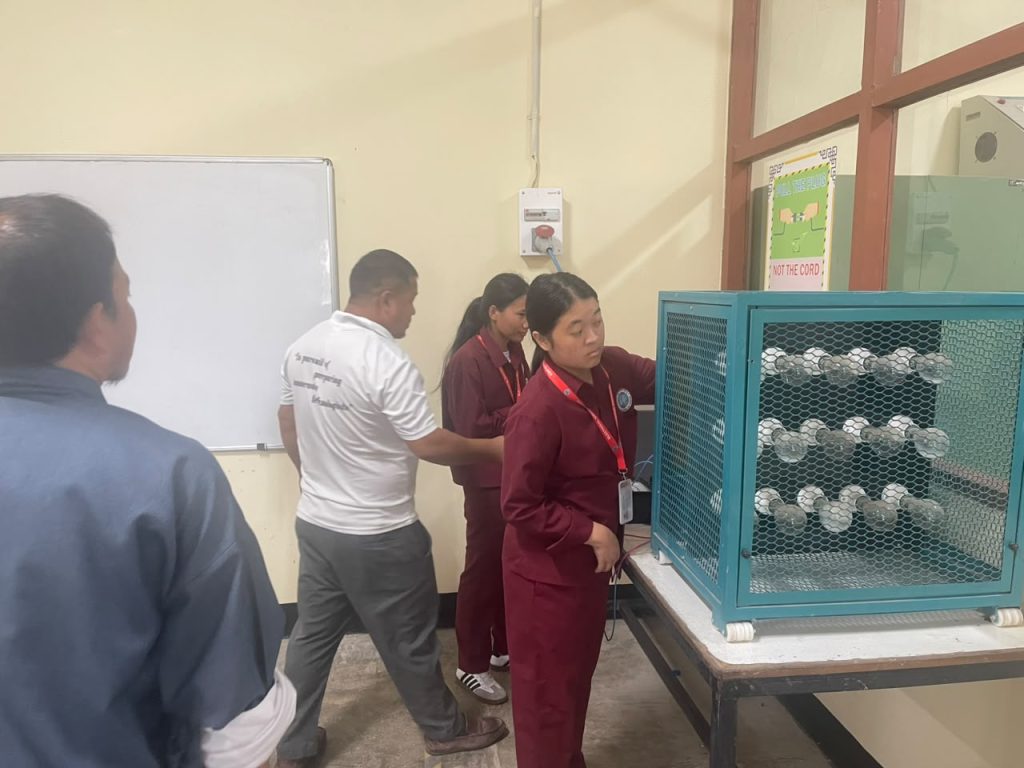
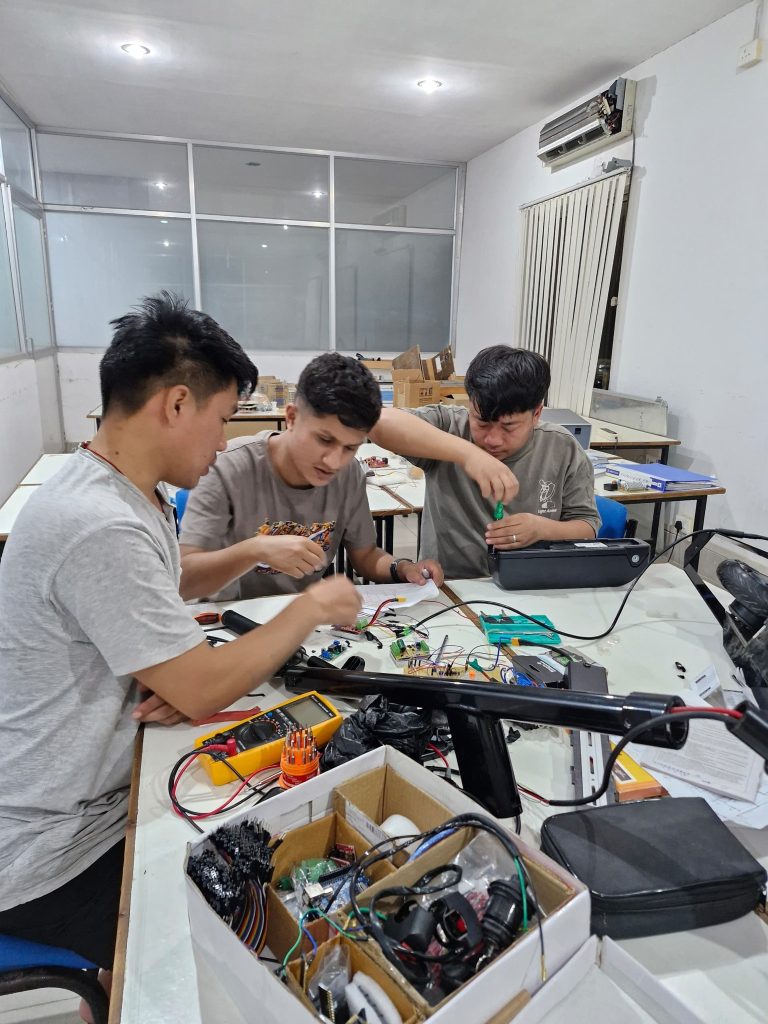
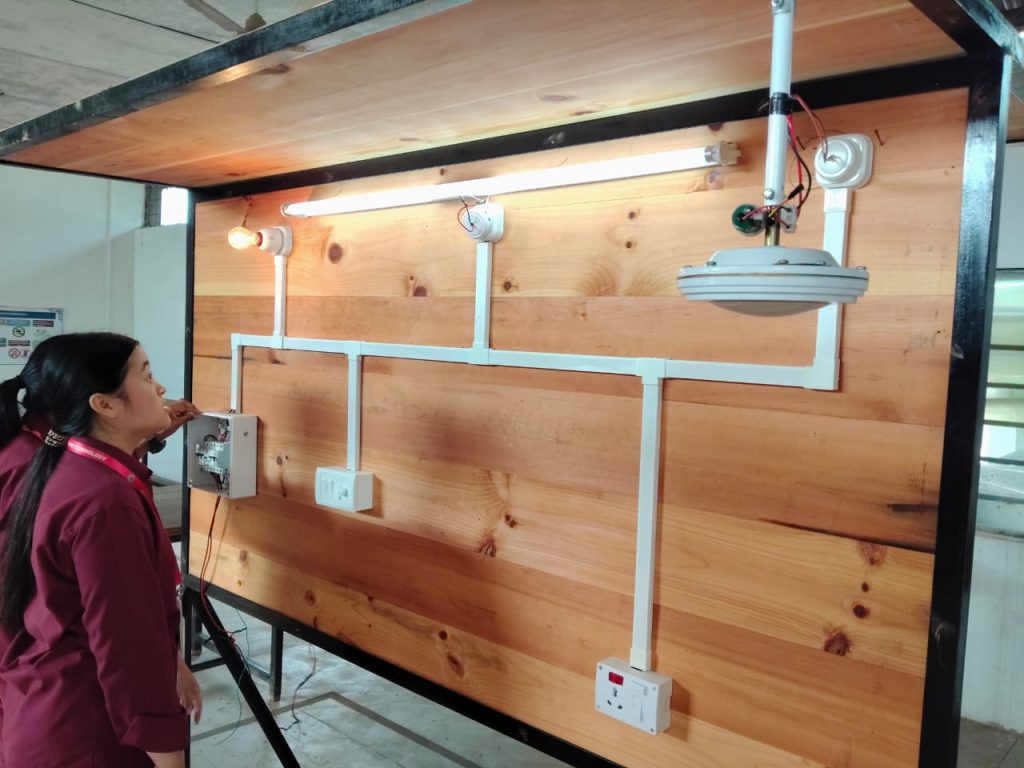
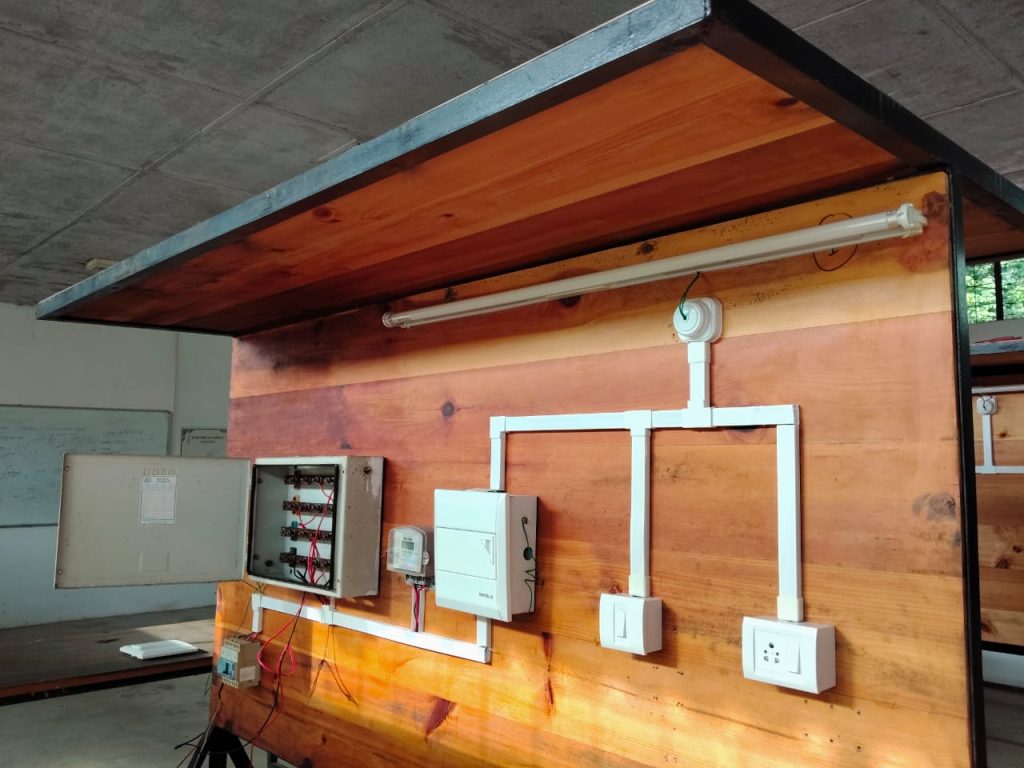
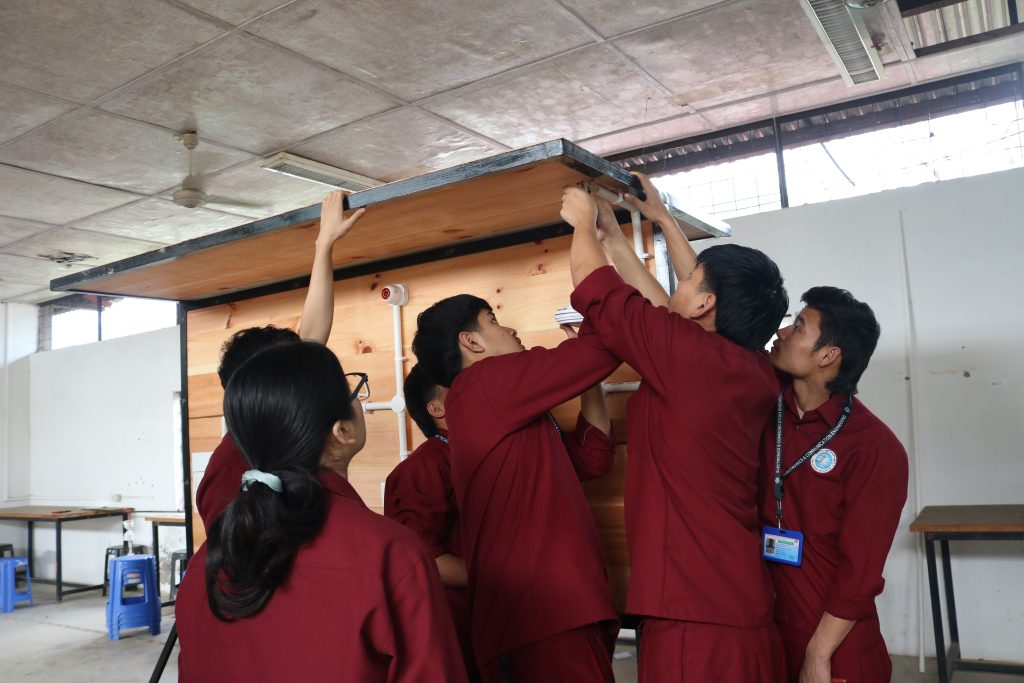
The Electrical Workshop Practice Laboratory provides hands-on training in electrical design drawing, wiring, installation, testing, and commissioning. Students develop practical skills in electrical drafting, using electrical tools, wire jointing, soldering, domestic and industrial wiring, distribution board installation, earthing systems, lighting circuits, and electrical safety. The laboratory prepares students for professional electrical installation, maintenance, and troubleshooting in accordance with industry standards.
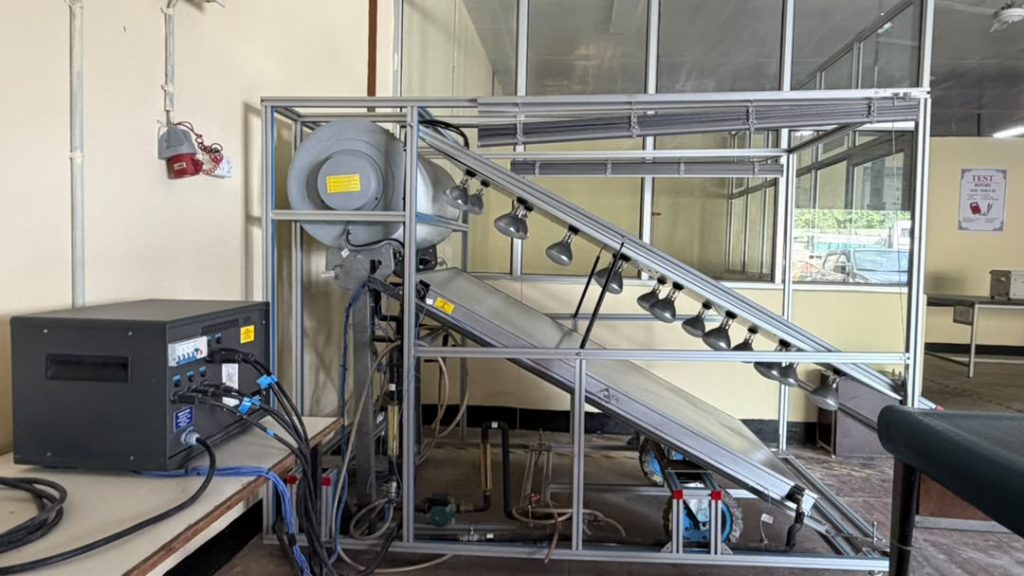
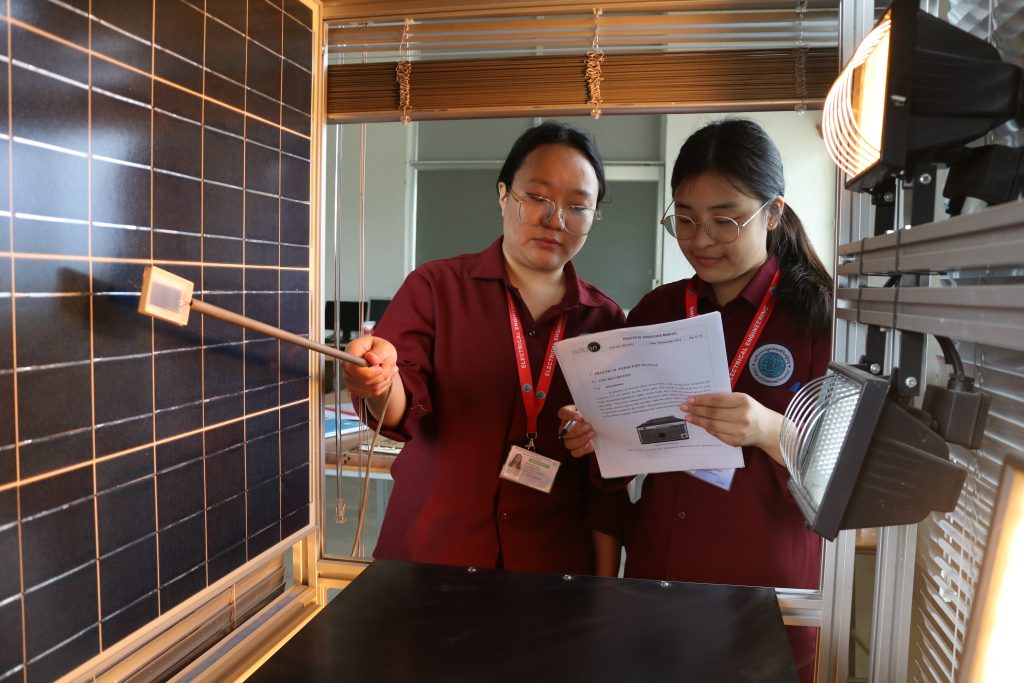
Renewable Energy Laboratory
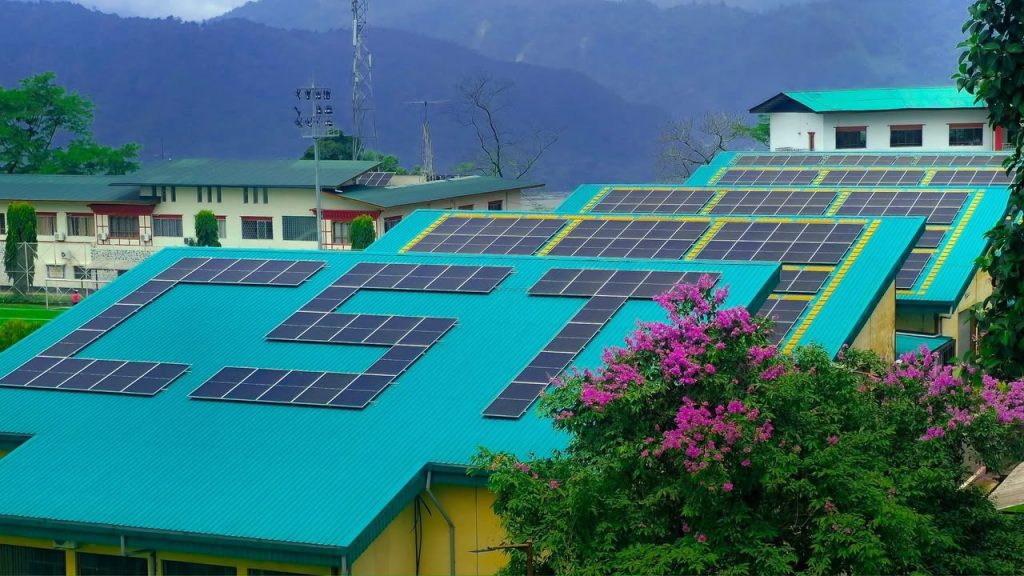
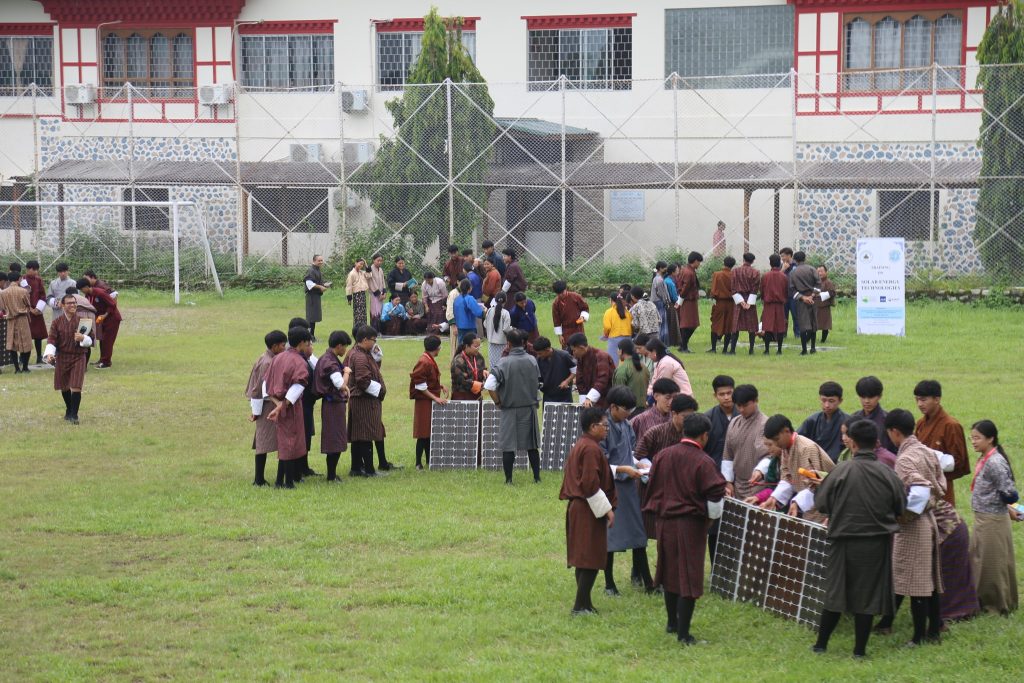
The Renewable Energy Systems Laboratory provides hands-on training in the design, installation, testing, and performance evaluation of renewable energy technologies. Students gain practical experience in solar photovoltaic (PV), solar thermal, wind, battery energy storage, hybrid energy systems, energy auditing, and system monitoring. The laboratory strengthens skills in renewable energy system design, operation, maintenance, troubleshooting, and sustainable energy solutions for real-world applications
Microgrid Laboratory
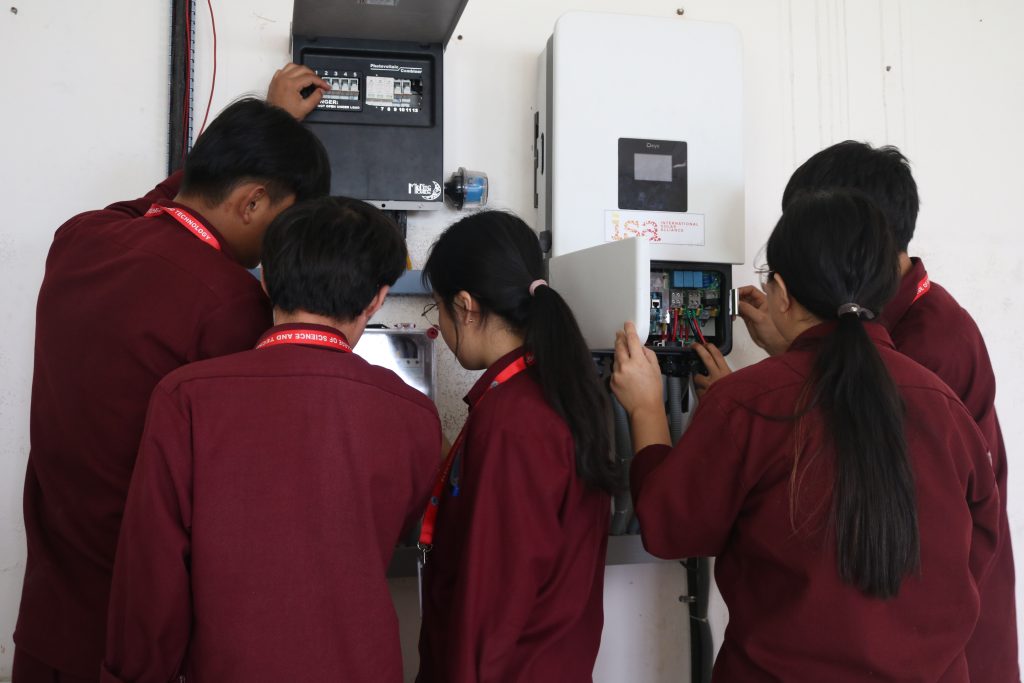
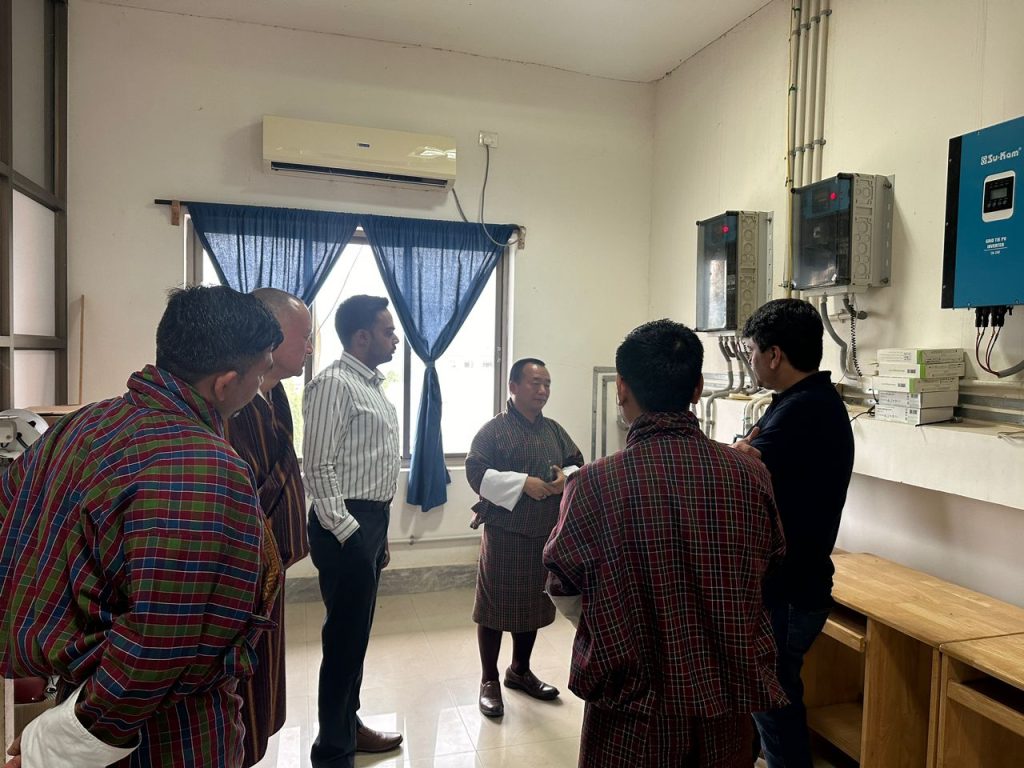
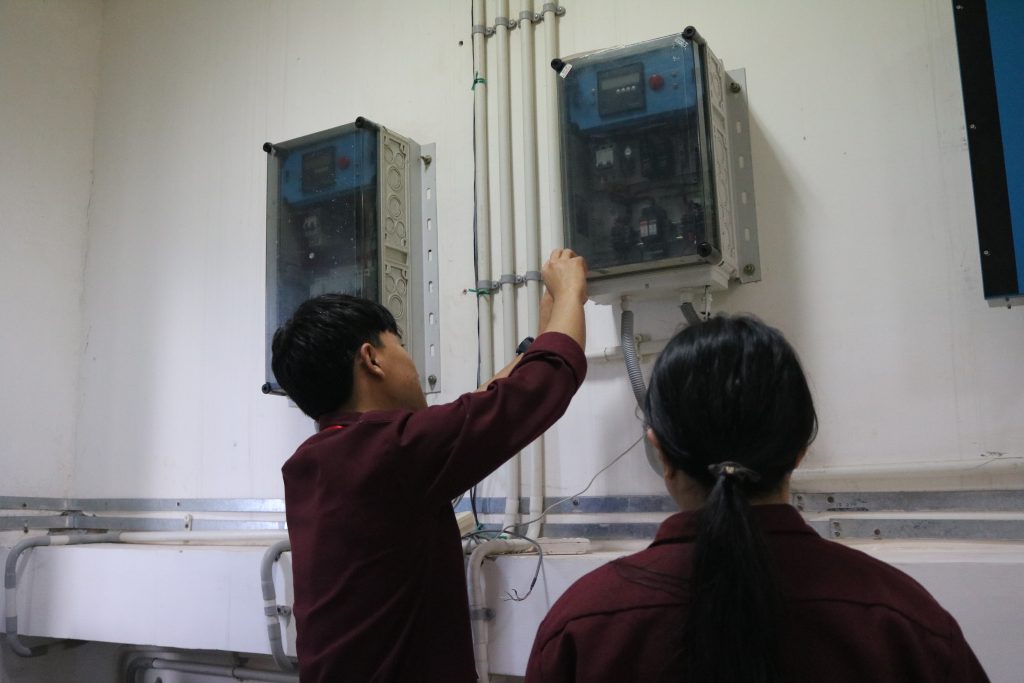
The Microgrid Laboratory established in 2014 through GEF Project funded by UNDP, provides practical training in the design, operation, control, and analysis of modern microgrid systems. Students gain hands-on experience with grid-connected and islanded operation, distributed energy resources, solar PV integration, battery energy storage, power electronic converters, smart inverters, energy management systems, load management, protection, monitoring, and real-time control, preparing them for next-generation smart grid and sustainable energy applications.
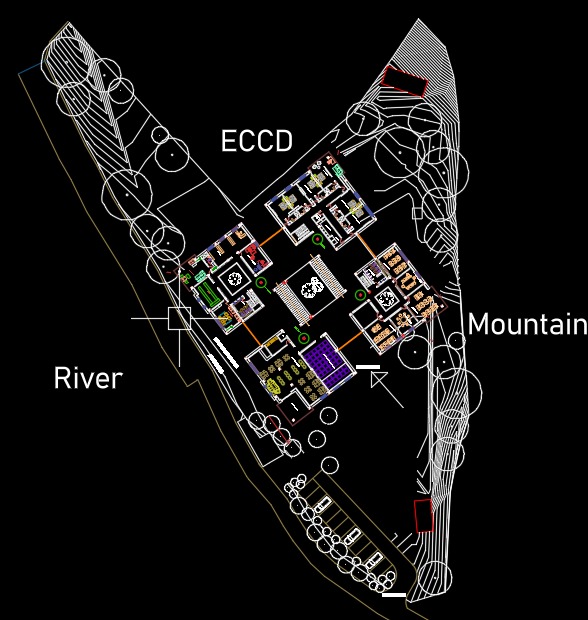
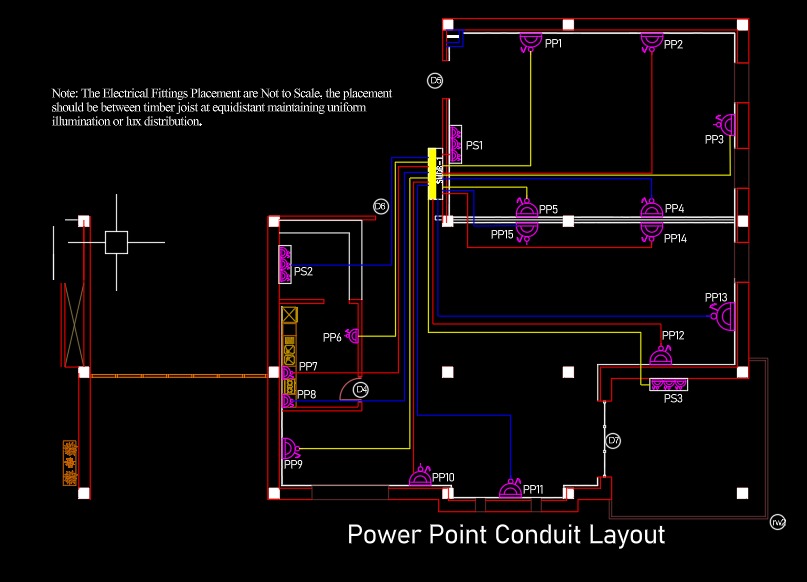
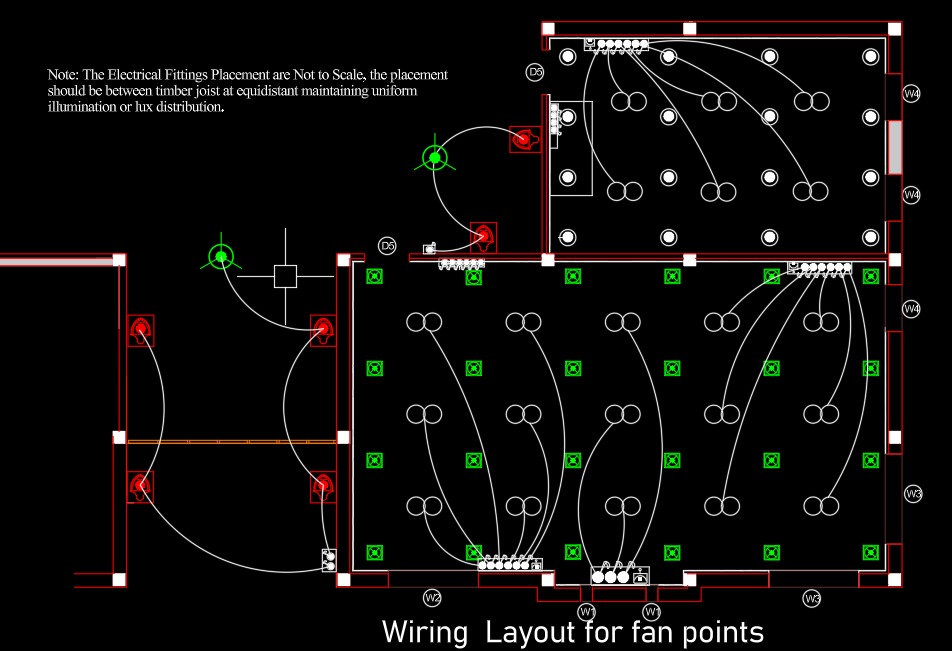
Electrical Design Drawing for RUB International Centre, PCE, Paro
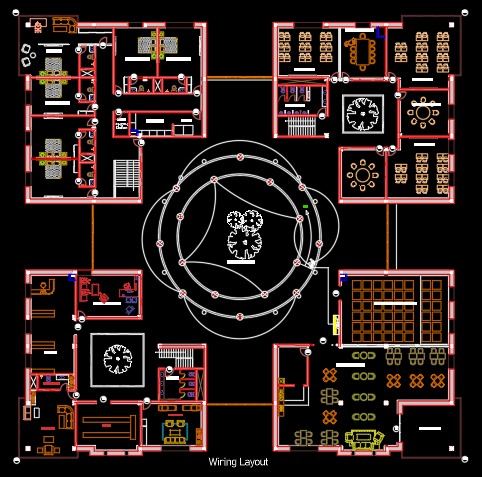
The Department of Electrical and Electronic Engineering (EEED) extends its expertise beyond teaching and research by actively engaging in consultancy services that support institutional and national development initiatives. Faculty members of the department contributed to the preparation of the electrical design drawings and fire safety design drawings for the Royal University of Bhutan (RUB) International Center. These consultancy engagements provide opportunities for faculty to enhance their technical, professional, and interpersonal skills while addressing real-world engineering challenges. Through such collaborations, the department continues to deliver high-quality technical services, strengthen partnerships with stakeholders, and contribute to the development of safe, sustainable, and modern infrastructure.
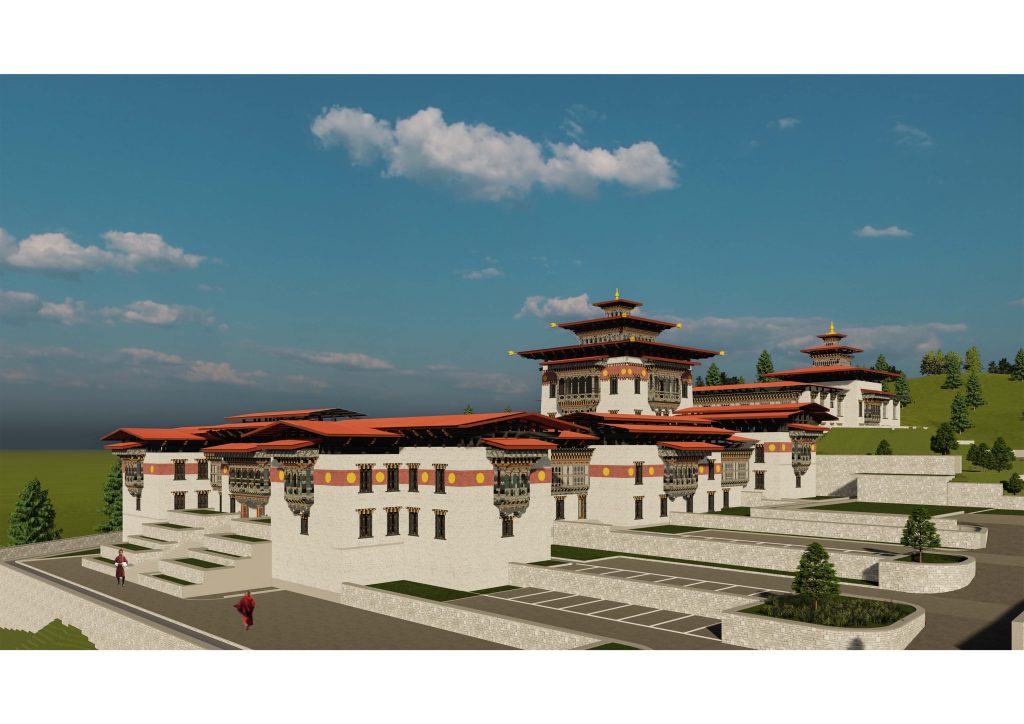
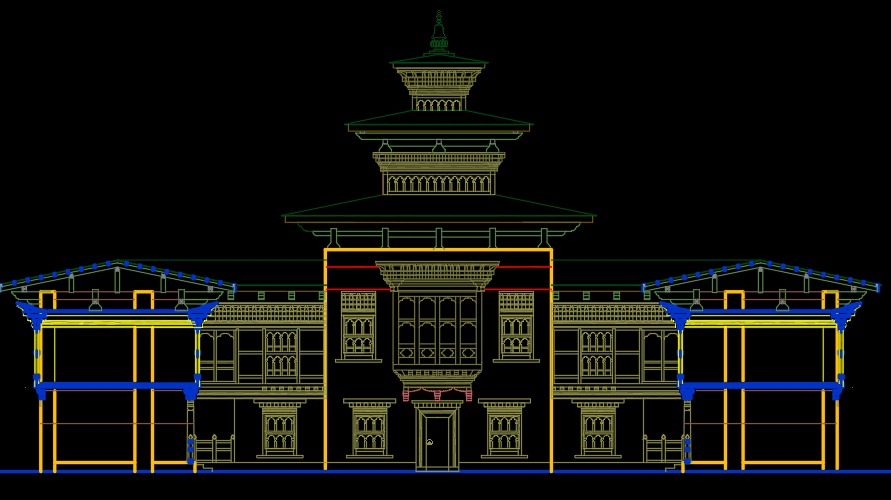
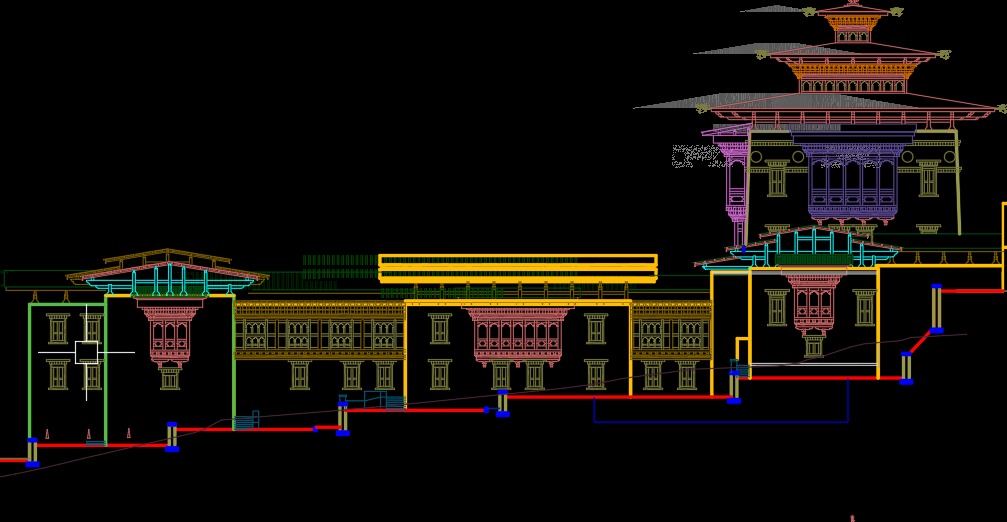
Electrical and Fire Safety Design Drawing of Tashiyangtse Dzong
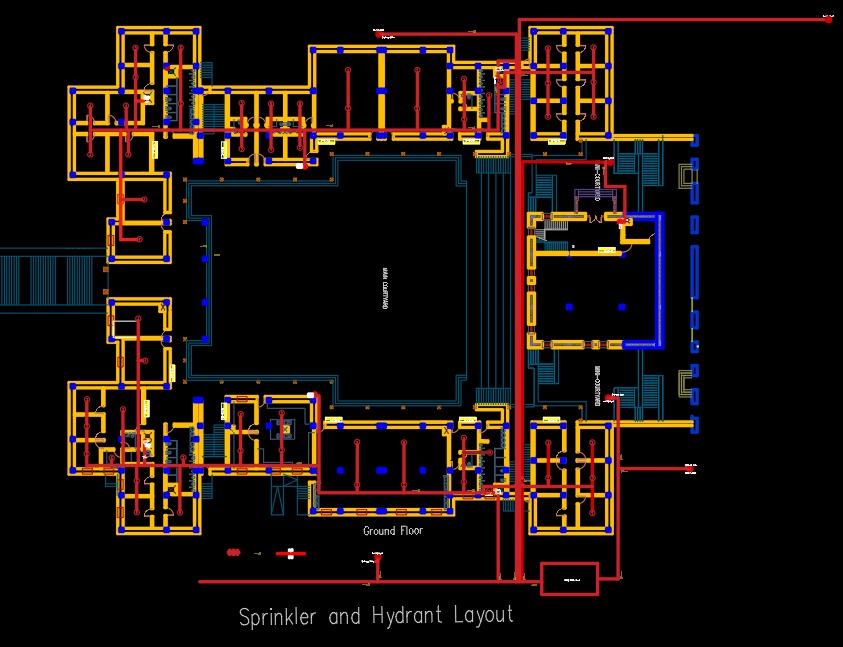
In addition to teaching, research, and laboratory activities, the faculty members of the Department of Electrical and Electronic Engineering (EEED) actively contribute to professional consultancy services for national development. As part of this commitment, faculty members were involved in preparing the electrical design drawings and fire safety design drawings for the Tashiyangtse Dzong restoration project. Such consultancy engagements enable faculty to strengthen their professional and interpersonal competencies while applying academic expertise to real-world engineering challenges.
Item #3
This module enables students to apply theoretical knowledge to a practical engineering problem, strengthening their analytical and general engineering competencies. Working in groups of up to four under a qualified tutor, students undertake independent research—formulating a problem, evaluating its technical and economic feasibility, and executing the project across the 7th and 8th semesters. The process includes proposal presentation, two progress reviews, and a final review, culminating in a comprehensive written report and professional presentation. The final report must be 6000–8000 words, excluding references, tables, table of contents, and figures (as per 57th PQC, RUB).
2020
BE Final Year Research Project (PRW403)
- asflkasfl
- aksdgksdjg
- asfaksf
- asfkasfj
- asjfkasf
- asjfkasf
- asjfkasf
- asfjasf
2021
2022
2023
2024
2025
E Final Year Research Project (PRW403), 2024 – 2025
- asfasf
- afasf
- afasf
- afasf
- asf
2026
BE Final Year Research Project (PRW403), 2025-2026 (Topics)
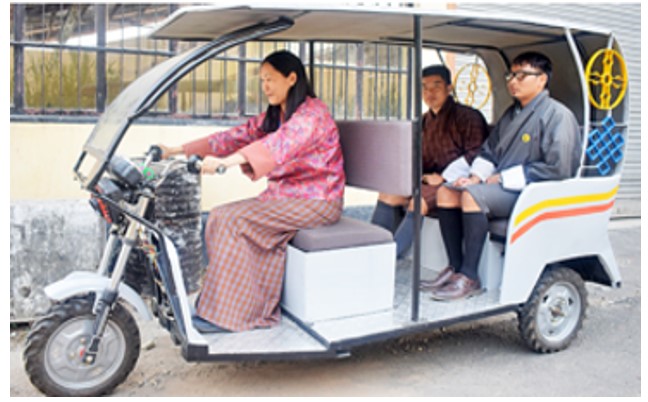
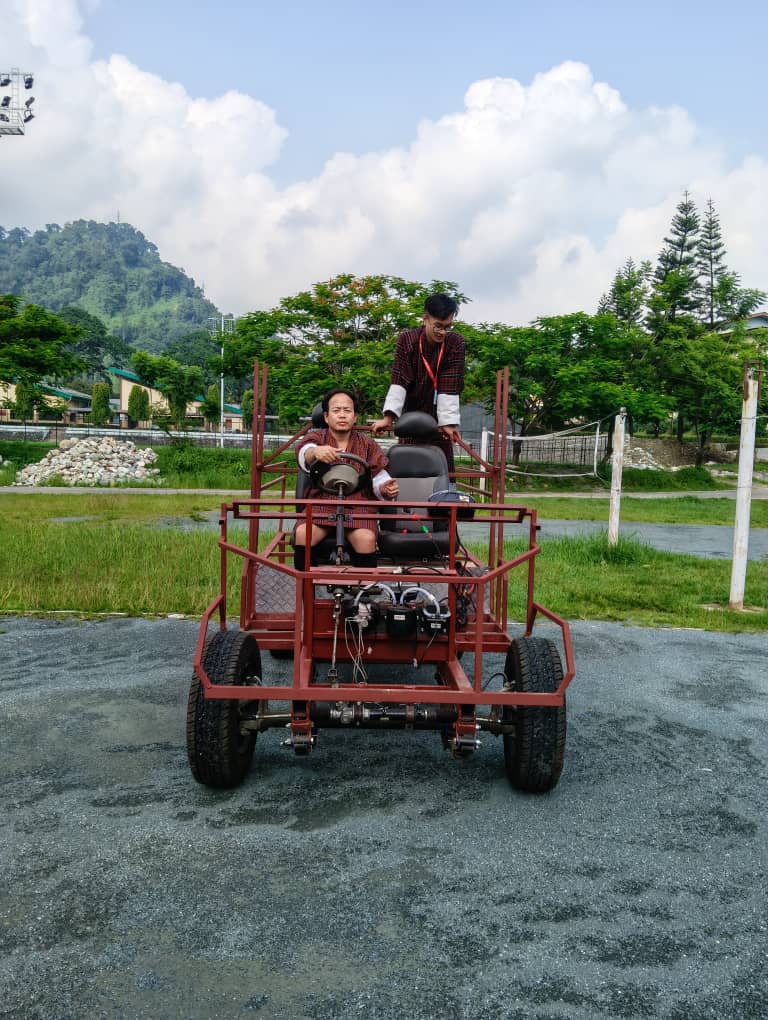
- Design and Fabrication of E-Trucks.
- Assessment, upgradation and modeling of the LV distribution system of the CST campus.
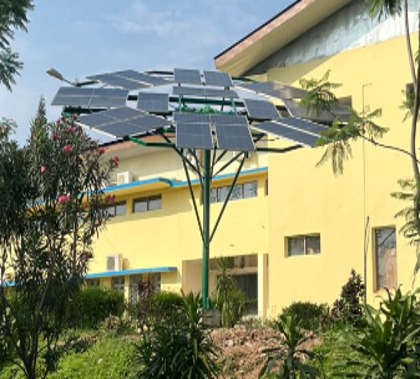
- Design and implementation of a 5 kW solar tree at the College of Science and Technology.
- Detailed project report on a 200 kW grid-tied solar PV system at CST Campus.
- Performance Evaluation of Overcurrent and Earth Fault Relay Coordinations in a 66 kV Bus Bar Line: A Case Study on Malbase Substation.
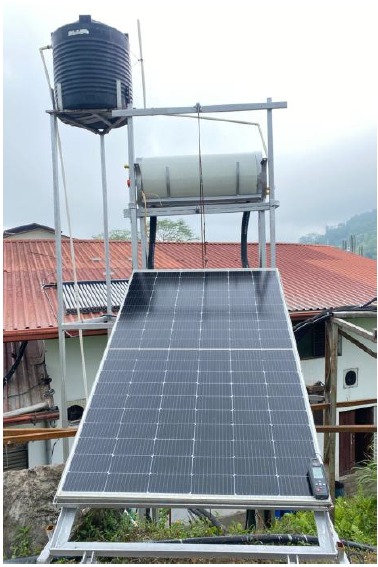
- Performance Analysis of Solar PVT System
- Contingency Analysis for Renewable Integrated Western Grid of Bhutan
- Investigating Power System Stability and Dynamic Response of Grid Due to Integration of Sephu Solar PV Plant.
- Power Quality Analysis of a Solar PV Microgrid: A Case Study of CST.
Student Project 2019
Title: Performance Analysis of Solar PVT System.
Guide: Mr. Manoj Sharma
Co-Guide: Asst. Prof. Cheku Dorji
Students: Sonam Youden, Tenzin Dema & Karma Jimba
Student Project 2024
Title: Performance Analysis of Solar PVT System.
Guide: Mr. Manoj Sharma
Co-Guide: Asst. Prof. Cheku Dorji
Students: Sonam Youden, Tenzin Dema & Karma Jimba
Student Project 2025
Title: Performance Analysis of Solar PVT System.
Guide: Mr. Manoj Sharma
Co-Guide: Asst. Prof. Cheku Dorji
Students: Sonam Youden, Tenzin Dema & Karma Jimba
Students Project 2026
Title: Design and Fabrication of E-Truck.
Guide: Mr. Manoj SHarma
Co-Guide: Mr. Aita Bahadur Subba
Students: Phuntsho Tashi, Dampai Choezang & Nyintop Dempa
Abstract:
The 2025 – 2026 Final Year Projects in Electrical Engineering at the College of Science and Technology showcase the innovation, technical excellence, and research potential of young Bhutanese engineers in addressing national energy and infrastructure challenges. The projects span electric vehicle development, solar photovoltaic and photovoltaic-thermal systems, smart campus energy solutions, power system protection, renewable energy integration, grid stability, contingency analysis, power quality, and distribution network modernization. By combining advanced engineering design, simulation, experimentation, and real-world applications, these studies foster sustainable technologies that align with Bhutan’s clean energy vision and the 10X Economic Transformation initiative.
Title: Performance Analysis of Solar PVT System.
Guide: Mr. Aita Bahadur Subba
Co-Guide: Asst. Prof. Cheku Dorji
Students: Sonam Youden, Tenzin Dema & Karma Jimba